A hygienist appointment costs £27.90 on the NHS if scaling is clinically necessary, or £76.60 if you need more extensive gum treatment. Privately, expect £40 to £150, depending on region and appointment length. The NHS route is cheaper but usually requires a dentist referral first. Private hygienists can often see you directly, without seeing a dentist at all.
What Is the NHS Charge for a Hygienist?
A hygienist visit falls into Band 1 or Band 2, depending on complexity. A standard scale and polish, when your dentist judges it clinically necessary, sits within Band 1 at £27.90. More extensive treatment for gum disease, sometimes called periodontal therapy, sits within Band 2 at £76.60. The NHS does not offer a separate, fixed “hygienist price.” The charge depends entirely on what your gums actually need.
NHS vs Private Hygienist Cost
| Route | Cost | Access |
|---|---|---|
| NHS (Band 1) | £27.90 | Usually requires dentist referral first |
| NHS (Band 2) | £76.60 | For more extensive gum disease treatment |
| Private, standard practice | £40 to £60 | Direct access, no referral needed |
| Private, London and South East | £100 to £150 | Direct access, no referral needed |
| AirFlow polishing add-on | Extra £30 to £50 | Available privately, occasionally on the NHS if clinically justified |
Why NHS Hygienist Visits Usually Need a Dentist Referral First
Within the NHS, a hygienist visit is generally only available after your dentist assesses you and decides it is clinically necessary. You cannot usually book straight into an NHS hygienist slot. Private practice works differently. A rule introduced by the General Dental Council in 2013, called Direct Access, allows patients to see a dental hygienist privately without a prior dentist examination. If you have not had a check-up recently, most practices will still recommend one to rule out anything a hygienist visit alone would miss.
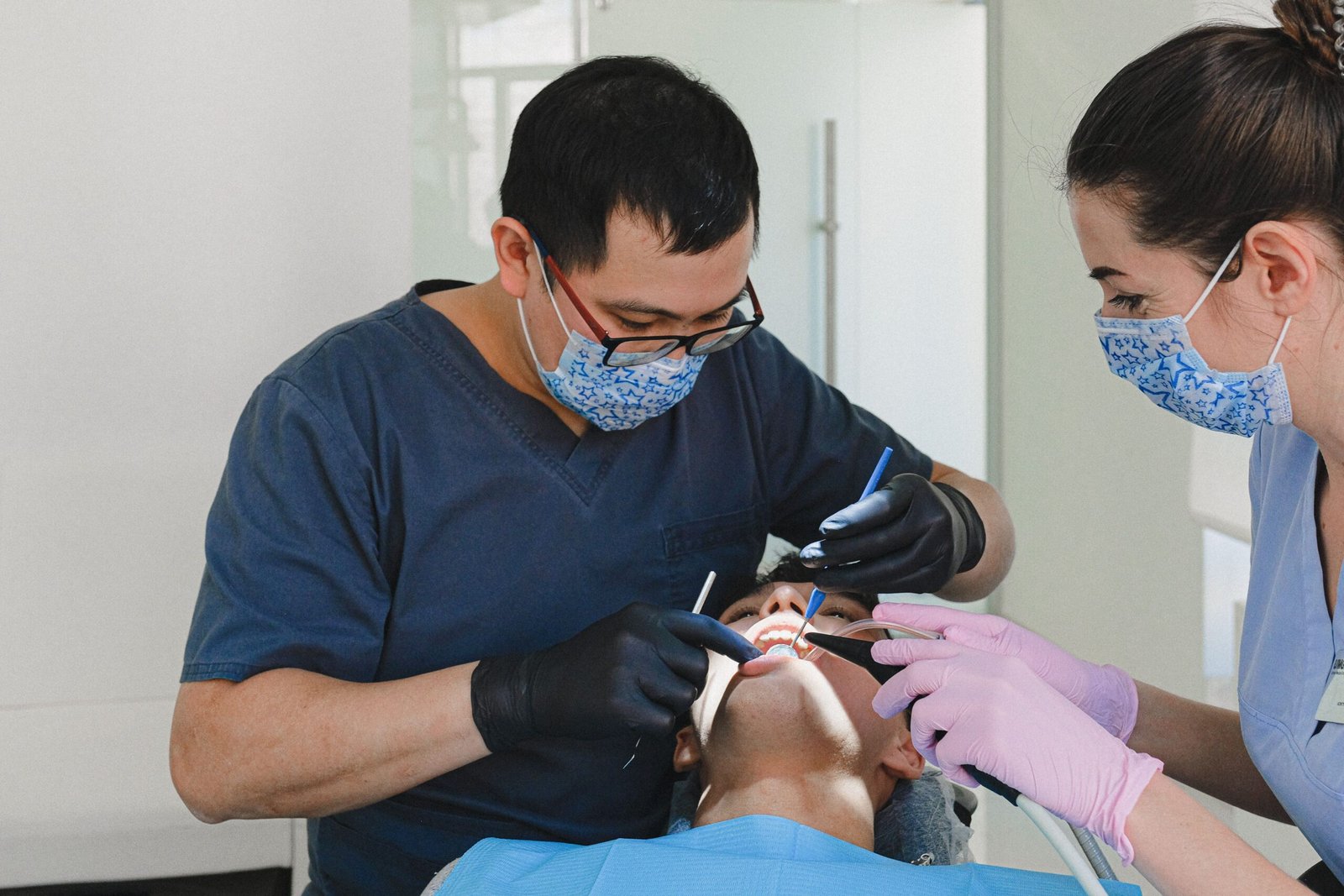
What Happens at a Hygienist Appointment
- Scaling: removing hardened plaque, known as calculus or tartar, from the tooth surface and along the gum line (our guide to how to remove plaque from teeth and improve gum health covers exactly why this step can’t be done safely at home)
- Polishing: smoothing the tooth surface and removing surface staining after scaling
- Gum assessment: checking for signs of gum disease, including bleeding, pocket depth and inflammation
- Oral hygiene advice: guidance on brushing technique, flossing or interdental brushes, tailored to your specific problem areas
NHS appointments typically run 20 to 30 minutes. Private appointments often run 30 to 60 minutes, allowing more time for thorough cleaning and detailed advice. For more serious gum disease, the NHS also offers a prolonged periodontal treatment plan, sometimes called “10C,” which spreads deeper cleaning across two further appointments.
Does a Hygienist Get Rid of Stains?
Yes, for surface staining. Polishing removes extrinsic stains sitting on the outside of the tooth, caused by coffee, tea, red wine or tobacco. It does not change intrinsic discolouration, staining that has developed inside the tooth structure itself. Intrinsic discolouration needs whitening, not a hygiene appointment, to change. NHS care is based on clinical need rather than appearance, so a hygiene visit purely for cosmetic stain removal, with no underlying plaque or gum issue, is not something the NHS funds.
AirFlow Polishing: What It Is and What It Costs
AirFlow uses a combination of water, compressed air and fine sodium bicarbonate powder to clean and polish teeth. It is particularly effective against stubborn staining that standard polishing struggles with, and many patients find it gentler on teeth and gums than traditional scaling alone. Expect an extra £30 to £50 on top of a standard hygiene appointment if you choose this option privately.
How Much Is Two Fillings on the NHS?
Two fillings cost the same as one on the NHS: £76.60, the standard Band 2 charge. The NHS charges once per course of treatment, not once per filling. Our guide to NHS dental bands explained covers exactly how this “one charge per course” rule works across every band.
NHS Dental Charges for Pensioners
Pensioners pay the same hygienist charges as everyone else in England unless they qualify for an exemption through Pension Credit Guarantee Credit or another qualifying benefit. Reaching state pension age alone does not exempt you from dental charges.
How Often Should You See a Hygienist?
Research on ideal frequency remains inconclusive; there is no proof that more frequent cleaning produces better outcomes for everyone. Most dentists recommend every six months for people with generally healthy gums, and every three to four months for people with a history of gum disease, smoking, or diabetes, since these groups tend to accumulate plaque and calculus more quickly.
How to Find a Private Dental Hygienist Near You
Search for GDC-registered hygienists in your area, since every practising dental hygienist in the UK must be registered with the General Dental Council. Many practices list hygienist availability separately from dentist appointments. If you have not had a recent check-up, ask whether the practice recommends a dental exam alongside your first hygiene visit.
Is It Worth Paying for a Private Hygienist?
It depends on your priorities. Choose private if you want a longer appointment, faster access without a referral, or techniques like AirFlow polishing for stubborn staining. Choose NHS if cost is your main concern and your gum health issue is clinically significant enough to qualify. Many people use the NHS for necessary treatment and pay privately only for stain removal or a longer, more thorough clean.
Frequently Asked Questions
What is the NHS charge for the hygienist?
£27.90 under Band 1 for a standard scale and polish, or £76.60 under Band 2 for more extensive gum disease treatment, depending on what your dentist assesses as clinically necessary.
How much should you pay for a dental hygienist privately?
Expect £40 to £60 at a standard UK practice, rising to £100 to £150 in London and the South East. AirFlow polishing typically adds another £30 to £50.
Can I book a dental hygienist without seeing a dentist first?
Privately, usually yes, under the GDC’s Direct Access rule introduced in 2013. On the NHS, you generally need a dentist referral first, since the hygienist visit is assigned to a treatment band based on your dentist’s assessment.
Does a hygienist remove all types of tooth staining?
No. A hygienist removes surface staining from food, drink and tobacco through polishing. Staining that has developed inside the tooth itself requires whitening treatment, not a hygiene appointment.
Is a dental hygienist appointment covered by NHS if I just want cleaner-looking teeth?
No. NHS treatment is based on clinical need, such as plaque build-up or gum disease, not cosmetic preference. A purely cosmetic clean for appearance alone is private treatment only.
This article is for general information only and is not a substitute for professional dental advice. Prices vary by practice and region; confirm current costs directly with your dentist or hygienist.
About the Author: Written by the Well Ideas editorial team, dedicated to researching and sharing practical, evidence-informed wellness guidance for a healthier everyday life.