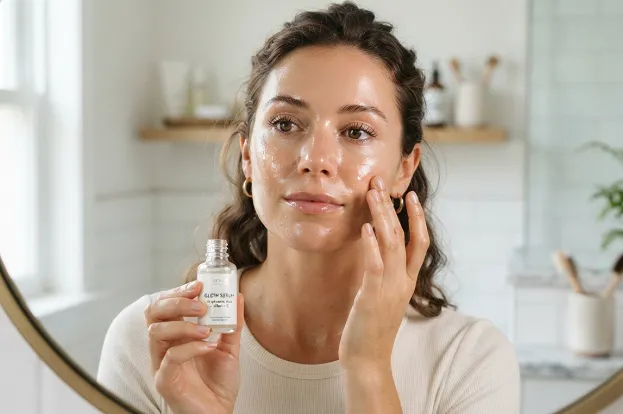

Niacinamide strengthens the skin barrier, reduces excess oil, minimises the appearance of pores, fades hyperpigmentation, and boosts hydration. It is a form of vitamin B3, tolerated by nearly all skin types, including sensitive and acne-prone skin, which makes it one of the few active ingredients suitable for almost every skincare routine.
What Is Niacinamide?
Niacinamide, also called nicotinamide, is a water-soluble form of vitamin B3. The skin cannot produce niacinamide on its own; topical application delivers it directly where it’s needed. Once absorbed, niacinamide restores cellular NAD+ levels, the compound cells use for energy production and repair, which drives its wide-ranging effects on barrier function, oil regulation, and pigmentation.
How Niacinamide Works on Skin
Niacinamide acts through three primary mechanisms:
- Barrier reinforcement: it stimulates ceramide and fatty acid production, strengthening the skin’s lipid barrier and reducing water loss
- Pigmentation control: it blocks the transfer of melanin from melanocytes to skin cells, fading dark spots and evening out tone over time
- Oil regulation: it moderates sebaceous gland activity, reducing excess oil production without over-drying the skin
Key Benefits of Niacinamide for Skin
1. Strengthens the Skin Barrier
Niacinamide increases ceramide production, the lipids that hold skin cells together and lock in moisture. A stronger barrier means better resistance to irritants, pollution, and moisture loss, and greater tolerance for other active ingredients in a routine.
2. Reduces Hyperpigmentation and Dark Spots
Clinical studies show niacinamide inhibits melanosome transfer, the process that deposits pigment in skin cells. Consistent use over 8 to 12 weeks visibly fades dark spots and evens out overall skin tone.
3. Minimises the Appearance of Pores
By regulating sebum production and improving skin elasticity, niacinamide reduces the appearance of enlarged pores, particularly with consistent use over several weeks.
4. Calms Redness and Inflammation
Niacinamide down-regulates inflammatory mediators in the skin, making it effective for calming redness associated with acne, rosacea-prone skin, and general sensitivity.
5. Regulates Oil Production
For oily and acne-prone skin, niacinamide helps balance sebum output, reducing shine without stripping the skin of moisture the way stronger actives can.
6. Supports Collagen Production
By boosting cellular energy metabolism, niacinamide supports fibroblast activity, the cells responsible for producing collagen, contributing to firmer, more elastic-looking skin over time.
7. Protects Against Environmental Damage
Niacinamide’s antioxidant activity helps neutralise free radicals generated by UV exposure and pollution, supporting the skin’s natural defence and repair processes.
Niacinamide for Different Skin Concerns
| Skin Concern | How Niacinamide Helps |
|---|---|
| Acne and breakouts | Reduces inflammation and regulates oil without over-drying |
| Dark spots and hyperpigmentation | Blocks pigment transfer, fading spots over 8-12 weeks |
| Enlarged pores | Regulates sebum and improves skin texture and elasticity |
| Dry or dehydrated skin | Strengthens the lipid barrier, reducing water loss |
| Sensitive or reactive skin | Calms inflammation with minimal irritation risk |
| Fine lines and early ageing | Supports collagen production and barrier repair |
How to Use Niacinamide in a Routine
- Concentration: 2 to 5 percent niacinamide is effective for most concerns; concentrations above 5 percent increase irritation risk without added benefit for most users
- Order of application: apply after cleansing and toning, before heavier moisturisers and sunscreen
- Frequency: suitable for twice-daily use, morning and evening, for most skin types
- Combining with other actives: pairs well with vitamin C, retinol, and hyaluronic acid; earlier concerns about niacinamide and vitamin C interacting have been disproven by more recent research
- Patch test first: apply a small amount to the inner arm to check for sensitivity before using it on the face
If you’re building out a full routine rather than adding a single ingredient, our guide to the best skincare routine for glowing skin covers the order and timing for combining niacinamide with other steps.
Niacinamide vs Vitamin C: Which Should You Use?
| Feature | Niacinamide | Vitamin C |
|---|---|---|
| Primary strength | Barrier repair, oil control, pore appearance | Brightening, antioxidant protection, collagen synthesis |
| Skin sensitivity | Very well tolerated, including sensitive skin | Can cause irritation, particularly at higher concentrations |
| Best time of use | Morning or evening | Typically morning, under sunscreen |
| Can they be combined? | Yes, safe and often used together | Yes, safe and often used together |
How Long Does Niacinamide Take to Work?
Niacinamide typically shows visible improvements in skin texture and hydration within 2 to 4 weeks of consistent use. Hyperpigmentation and dark spot reduction take longer, usually 8 to 12 weeks, since pigment transfer inhibition works gradually as skin cells naturally turn over.
Frequently Asked Questions
Can niacinamide cause purging?
No. Unlike retinol or exfoliating acids, niacinamide does not accelerate cell turnover in a way that triggers purging. Any breakout after starting niacinamide is more likely a reaction to another product or an unrelated cause.
Is niacinamide safe during pregnancy?
Yes. Niacinamide is generally considered safe for use during pregnancy and breastfeeding, unlike retinoids, which are typically avoided. Confirm with your doctor or midwife if you have specific concerns.
Can I use niacinamide every day?
Yes. Niacinamide is well tolerated for daily, twice-daily use in most people, making it one of the few active ingredients suitable for consistent long-term use without a need to cycle or introduce gradually in most cases.
Does niacinamide help with acne scars?
Niacinamide helps fade post-inflammatory hyperpigmentation, the dark or red marks acne leaves behind, more effectively than it addresses textured or pitted scarring, which typically requires treatments like retinoids or professional procedures.
This article is for general information only and is not a substitute for professional dermatological advice. If you have a skin condition or persistent irritation, please consult a dermatologist.
About the Author: Written by the Well Ideas editorial team, dedicated to researching and sharing practical, evidence-informed wellness guidance for a healthier everyday life.