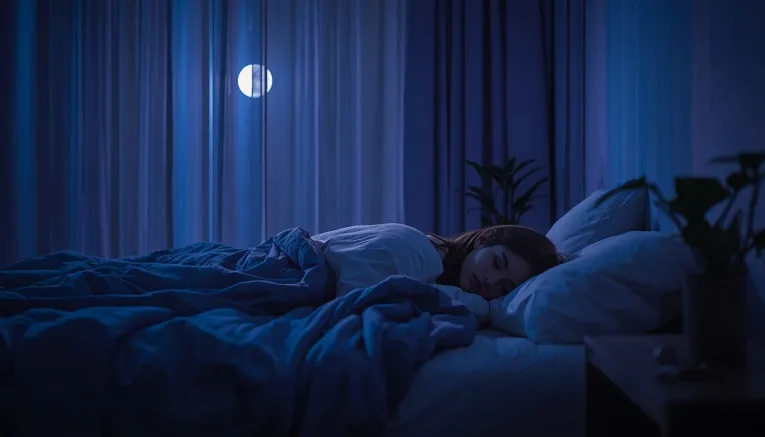
Screens suppress melatonin, the hormone that signals it’s time to sleep, by exposing the eyes to blue light in the hours before bed. A landmark Harvard study found participants who read on a light-emitting device before bed experienced significantly delayed melatonin release, reduced REM sleep, and felt less alert the next morning compared to reading a printed book. Reducing screen exposure for one to two hours before bed, dimming evening light, and building a consistent screen-free wind-down routine are the interventions with the strongest research support for reversing this effect.
How Blue Light Disrupts Sleep
Blue light is a short-wavelength, high-energy portion of the visible light spectrum. Sunlight naturally contains it, which is exactly why exposure suppresses melatonin during the day, a normal and healthy part of staying alert. The problem is that phones, tablets, computers, and LED lighting emit a disproportionate amount of blue light relative to warmer wavelengths, and in the evening, this tricks the pineal gland into behaving as though it’s still daytime, delaying the natural melatonin rise that should begin as it gets dark.
What the Research Shows
| Study Finding | Detail |
|---|---|
| Harvard Medical School comparison study | Blue light suppressed melatonin for roughly twice as long as equally bright green light, and shifted circadian rhythm by twice as much (3 hours vs 1.5 hours) |
| PNAS e-reader study (Chang et al.) | Reading on a light-emitting device before bed significantly delayed melatonin onset, reduced REM sleep, and left participants less alert the next day |
| 2017 screen-exposure study | Two hours of screen exposure before bed lowered melatonin levels by up to 22%, and total sleep time shortened by up to 28% |
| Insomnia prevalence research | People exceeding four hours of evening screen time had a 50% higher risk of insomnia |
Why Screens Disrupt Sleep in Two Ways
Screens interfere with sleep through two separate mechanisms working together. The first is physiological: blue light directly suppresses melatonin production and delays the body’s internal signal that it’s time to wind down. The second is behavioural: stimulating content, social media, work email, gripping shows, keeps the brain cognitively engaged and alert, which works against relaxation independent of the light itself. This is why simply dimming a screen’s brightness helps only partially; the content being consumed matters almost as much as the light emitted.
Evidence-Based Ways to Reduce Screen Time Before Bed
1. Set a Screen Curfew
Most sleep researchers recommend ending screen use one to three hours before your target bedtime, with UCLA Health specifically advising a two-to-three-hour buffer for the clearest benefit. Start with a smaller, realistic window, even 30 minutes, and extend it gradually rather than attempting an abrupt three-hour cutoff that’s unlikely to stick.
2. Use Night Mode and Blue Light Filters
Built-in night mode settings shift screen colours toward warmer tones, which reduces blue light output. Research shows this helps but doesn’t eliminate the risk entirely, since the stimulating content itself still keeps the brain alert even with warmer-toned light. Filters are a genuine harm-reduction tool, not a full substitute for reducing screen time itself.
3. Try Blue-Light-Blocking Glasses
A systematic review and meta-analysis found blue-blocking glasses worn in the evening improved sleep quality, particularly for people already prone to sleep disturbances. This makes them a reasonable option for people who need to use screens close to bedtime for work or other unavoidable reasons.
4. Dim Evening Lighting Throughout the Home
Even ambient light matters: research shows as little as 8 lux, roughly twice the brightness of a night light, can measurably suppress melatonin. Switching to warm-toned, dim lighting in the hour or two before bed, not just addressing screens, supports the same wind-down signal.
5. Replace Screen Time With a Low-Stimulation Activity
Reading a printed book, journaling, light stretching, or a warm bath all support the same wind-down window without the blue light or cognitive stimulation of a screen. If you prefer e-readers, an e-ink display like a basic Kindle emits no backlight and doesn’t carry the same melatonin-suppressing effect as a phone or tablet.
Our guide to benefits of journaling for mental health covers how a short pre-bed journaling session can double as both a screen-free wind-down activity and a tool for processing the day’s thoughts before sleep.
6. Get More Bright Light During the Day
Increasing exposure to natural daylight strengthens the contrast between day and night for your circadian system, making the body more responsive to darkness cues in the evening. This is a genuinely reciprocal relationship: more daytime light exposure is linked to better tolerance of unavoidable evening screen use.
A Practical Phased Approach
| Week | Change |
|---|---|
| Week 1 | Stop all screens 15-30 minutes before your target bedtime |
| Week 2 | Extend the screen-free window to 45-60 minutes |
| Week 3 | Extend to 90 minutes to 2 hours, and move your phone charger outside the bedroom |
A gradual approach avoids the shock of suddenly losing a primary evening activity all at once and gives you time to find screen-free alternatives you’ll actually stick with, rather than abandoning the change within a few days.
Children and Screen Time Before Bed
Children who have not yet gone through puberty experience significantly more melatonin suppression from evening light than post-pubescent adolescents, making bedtime screen limits particularly important for younger children. The American Academy of Pediatrics recommends keeping electronics out of children’s bedrooms overnight and modelling healthy screen habits as a parent, since children’s device use is strongly shaped by what they observe at home.
What If You Can’t Avoid Screens Before Bed?
- Use night mode or a blue light filter as a minimum baseline
- Lower screen brightness as much as comfortably possible
- Choose passive, low-stimulation content over anything emotionally engaging or work-related
- Hold the device further from your face, since light intensity decreases significantly with distance
How Long Before Bed Should Screens Stop?
Research consistently points to a range of one to three hours before bed as the window where screen avoidance produces measurable sleep benefits, with UCLA Health specifically recommending two to three hours for the clearest effect. Even a smaller reduction, stopping just 30 to 60 minutes earlier than your current habit, produces a meaningful improvement over no change at all.
Frequently Asked Questions
Do blue light glasses actually work?
Research supports their use as a harm-reduction tool: a systematic review found tinted lenses worn in the evening improved sleep quality, particularly in people already prone to sleep disturbance. They work best combined with, not instead of, reduced overall screen time.
Does watching TV before bed have the same effect as using a phone?
Both emit blue light and can suppress melatonin, though phones and tablets are typically held closer to the face, which increases light intensity reaching the eyes compared to a TV viewed from across a room.
How long does it take to notice better sleep after reducing screen time?
Some studies show measurable improvements, including faster sleep onset and less fragmented sleep, within about two weeks of consistently reduced evening screen exposure.
Is it the light or the content that disrupts sleep more?
Both contribute meaningfully. Blue light directly suppresses melatonin, while stimulating content, social media, work email, exciting shows, keeps the brain cognitively alert independent of the light itself. Addressing only one factor produces a smaller benefit than addressing both together.
This article is for general information only and is not a substitute for professional medical advice. If sleep difficulties persist despite consistent changes, please speak to a GP or sleep specialist.
About the Author: Written by the Well Ideas editorial team, dedicated to researching and sharing practical, evidence-informed wellness guidance for a healthier everyday life.