Your gut is home to trillions of bacteria that influence far more than digestion; they play a role in immunity, mood, energy, and even skin health. What you eat every day directly shapes this internal ecosystem. This guide covers the best foods for gut health, why they work, and how to build them into your routine without overhauling your entire diet overnight.
What Is Gut Health, and Why Does It Matter?
Gut health refers to the balance of bacteria living in your digestive tract, known as the gut microbiome. A diverse, well-fed microbiome supports digestion, strengthens the immune system, and helps regulate mood through the gut-brain connection. An imbalanced gut, by contrast, is linked to bloating, fatigue, and low-grade inflammation.
Signs Your Gut Health Might Need Support
- Frequent bloating, gas, or irregular bowel movements
- Ongoing fatigue not explained by sleep
- Frequent colds or infections
- Skin issues, such as breakouts or eczema flare-ups
- Sugar cravings that feel hard to control
Fibre-Rich Foods
Fibre is the single most important nutrient for gut health, since it feeds beneficial bacteria and helps them produce short-chain fatty acids that support the gut lining.
- Black beans and lentils, high in both soluble and insoluble fibre
- Oats, which contain beta-glucan, a fibre linked to a healthier gut lining
- Asparagus and leeks, natural sources of prebiotic fibre
- Berries, which combine fibre with beneficial polyphenols
Fermented Foods
Fermented foods introduce live microbes directly into the gut, which can increase microbial diversity over time.
- Live yoghurt, ideally unsweetened
- Kefir, a fermented milk drink rich in beneficial bacteria
- Sauerkraut and kimchi, fermented vegetables with live cultures
- Tempeh, a fermented soy product that also delivers plant protein and fibre
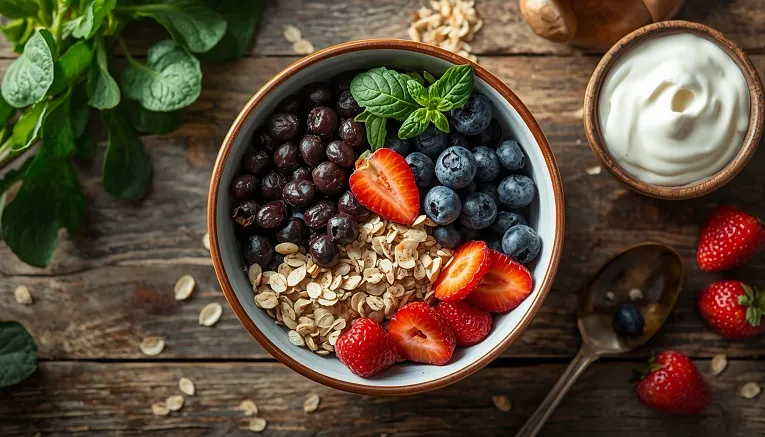
Combining a fermented food with a fibre-rich food at the same meal, such as yoghurt with berries, is one of the simplest ways to support your gut in one sitting.
Polyphenol-Rich Foods
Polyphenols are plant compounds that act similarly to prebiotics, feeding beneficial bacteria while also reducing inflammation.
- Olive oil
- Dark chocolate and cocoa, in moderation
- Green tea
- Colourful vegetables, including red cabbage and peppers
Plant Diversity Matters More Than Any Single Food
Research increasingly shows that eating a wide variety of plant-based foods, rather than relying on one or two “superfoods,” is one of the strongest predictors of a healthy, diverse gut microbiome. Aiming for a broad mix of vegetables, fruits, legumes, nuts, seeds, and wholegrains across the week tends to matter more than any individual ingredient.
If digestive discomfort is a recurring issue for you, it is also worth reading our guide on home remedies for food poisoning to understand when digestive symptoms need more than a dietary tweak.
Foods That Can Disrupt Gut Health
- Excess added sugar, which can feed less beneficial bacteria
- Ultra-processed foods, often low in fibre and high in additives
- Excess alcohol, which can disrupt the gut lining over time
- Artificial sweeteners, which some research links to changes in gut bacteria
A Simple Gut-Friendly Day of Eating
- Breakfast: Oats topped with berries and a spoonful of live yoghurt
- Lunch: A mixed bean salad with leafy greens and an olive oil dressing
- Snack: A small handful of nuts or seeds
- Dinner: Grilled fish or tempeh with roasted vegetables and a side of sauerkraut
How Long Does It Take to Improve Gut Health?
Small changes in gut bacteria can happen within days of adjusting your diet, but noticeable improvements in digestion, energy, or skin often take three to four weeks of consistent eating. Long-term microbiome diversity builds up over months, which is why consistency matters more than short “gut reset” programmes.
When to See a Doctor
Occasional bloating or digestive discomfort is normal, but speak to a GP if you experience persistent stomach pain, unexplained weight loss, blood in your stool, or ongoing changes in bowel habits, since these can sometimes signal an underlying condition that diet alone will not resolve.
FAQ
What foods heal your gut the fastest?
Fermented foods such as live yoghurt and kefir tend to introduce beneficial bacteria quickly, but lasting improvement depends on consistent fibre intake over several weeks.
What is the number one food for gut health?
There is no single best food, but fibre-rich, minimally processed plant foods, such as beans, oats, and vegetables, consistently rank as the most impactful category.
Can gut health affect mood?
Yes. The gut and brain communicate through the gut-brain axis, and an imbalanced gut microbiome has been linked to changes in mood and stress response.
How many plant foods should I eat a week for gut health?
Some research suggests aiming for around 30 different plant-based foods a week, including vegetables, fruits, legumes, nuts, seeds, and wholegrains, to support microbial diversity.
Final Thoughts
Improving gut health does not require an extreme diet overhaul. Adding more fibre, a few servings of fermented food, and a wider variety of plants each week is enough to meaningfully shift your microbiome over time. Start with one meal a day and build from there.
Written by the Wellideas Health Team. This article is intended for general information and does not replace professional medical advice. Please consult a GP if digestive symptoms persist.