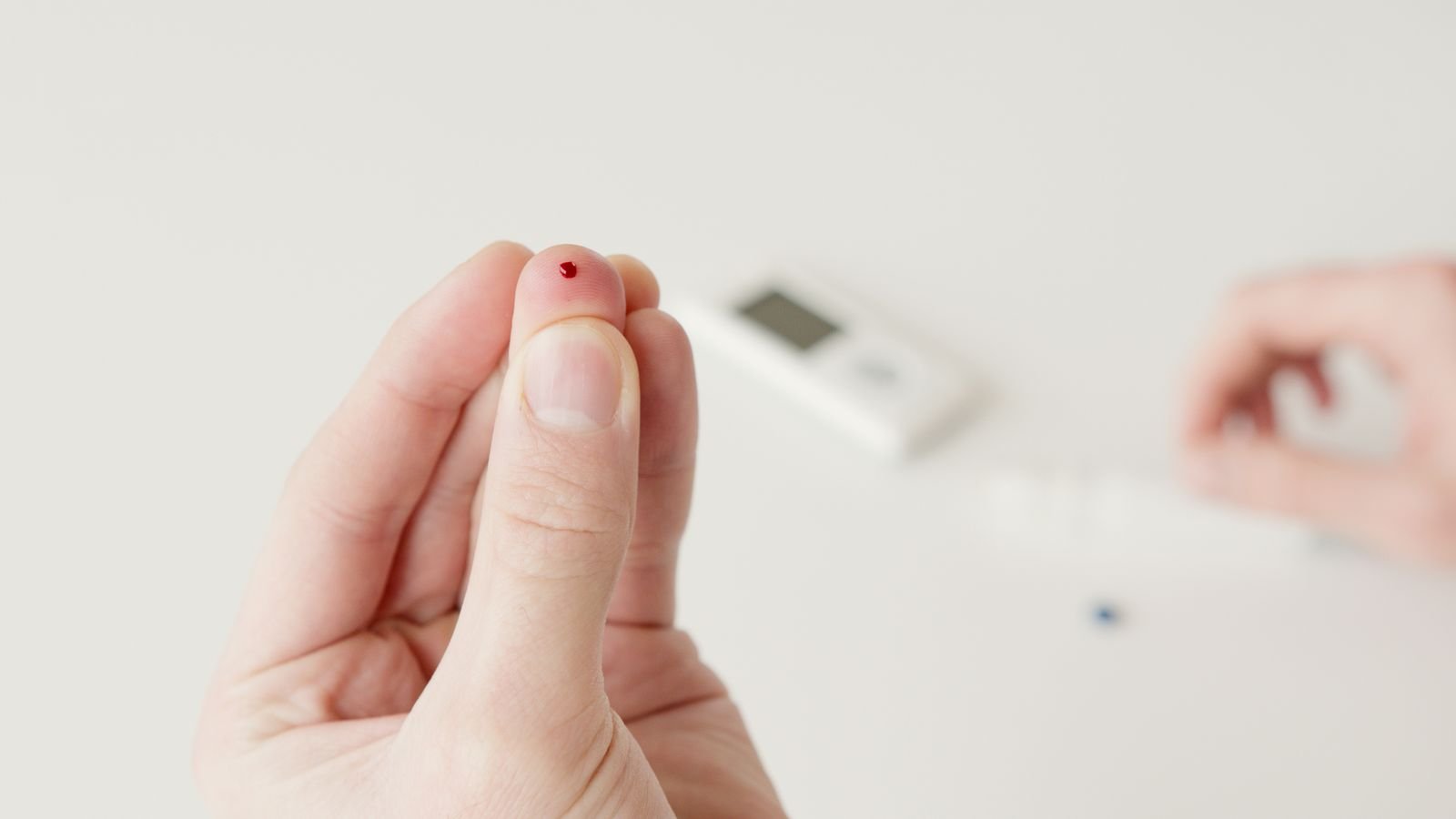
Prediabetes means your blood sugar is higher than normal, but not high enough to be type 2 diabetes. In the UK it is usually called non-diabetic hyperglycaemia. It is diagnosed by a blood test, with an HbA1c of 42 to 47 mmol/mol.
Most people with prediabetes feel completely well. Diabetes UK says there are not usually any symptoms. That is why a blood test, not how you feel, is the only way to know.
It can often be reversed. Losing 5 to 7 percent of your body weight, walking 150 minutes a week, and eating fewer refined carbohydrates can bring blood sugar back below 42. In the largest trial of its kind, those changes cut the risk of developing type 2 diabetes by 58 percent over three years. Your GP can also refer you to the free NHS Diabetes Prevention Programme, a nine month course called Healthier You.
Your numbers: HbA1c and fasting glucose
Table 1: HbA1c and fasting glucose ranges used in the UK.
| Test | Normal | Prediabetes | Type 2 diabetes |
|---|---|---|---|
| HbA1c | Below 42 mmol/mol (below 6.0 percent) | 42 to 47 mmol/mol (6.0 to 6.4 percent) | 48 mmol/mol or above (6.5 percent or above) |
| Fasting plasma glucose | Below 5.5 mmol/L | 5.5 to 6.9 mmol/L | 7.0 mmol/L or above |
HbA1c shows your average blood sugar over the previous two to three months, because it measures how much sugar has attached to the haemoglobin in your red blood cells, and red blood cells live for about three months. You do not need to fast for an HbA1c test. A fasting plasma glucose test measures your blood sugar after you have not eaten for at least eight hours.
One result of 48 or above does not on its own diagnose type 2 diabetes if you have no symptoms. The test is repeated, usually two to four weeks later, and only a second result at or above 48 confirms it. If your result is 42 to 47, you are in the prediabetes range, and your GP should offer you a blood test at least once a year to check whether it is rising, falling, or staying the same.
A note on the fasting glucose range: some older UK sources use 6.1 to 6.9 mmol/L as the lower bound. NICE guidance, PH38, uses 5.5 to 6.9 mmol/L, and that is the range this article uses.
What prediabetes is, and what it is not
Prediabetes is a risk state, not a diagnosis of diabetes. Your body is becoming resistant to insulin, the hormone that moves sugar from your blood into your cells. Your pancreas makes more insulin to compensate, and for a while that works. Over time, the compensation falls short, and your average blood sugar drifts upwards. That is what the HbA1c test picks up.
It is not type 2 diabetes, and it is not a sentence. Many people with prediabetes never develop type 2 diabetes, especially if they change what they eat, how much they move, and their weight. But it is not harmless either. People with prediabetes are at higher risk of type 2 diabetes, heart disease and stroke, and that risk starts before diabetes is diagnosed. That is why the NHS treats it as something to act on, not something to watch and wait on.
Diabetes UK estimates that prediabetes affects around one in 12 people. Other sources give different figures, because most people with prediabetes do not know they have it.
Symptoms: usually none, and that is the problem
Prediabetes usually has no symptoms at all. You can carry it for years without knowing. That is the central problem with it, and it is why the title question is slightly misleading. There is no reliable list of prediabetes symptoms to check yourself against, because for most people there is nothing to feel.
If you do notice symptoms, they are usually the symptoms of type 2 diabetes, which means your blood sugar may already have crossed the line. See your GP soon if you notice feeling very thirsty, needing to wee more often, especially at night, feeling very tired, blurred vision, cuts or wounds that heal slowly, losing weight without trying, or genital itching or thrush. Do not wait for your next annual check.
There is one visible clue worth knowing about. Darkened, velvety patches of skin, usually at the neck or armpits, are called acanthosis nigricans, and they are associated with insulin resistance. They are a reason to ask for a blood test, not a diagnosis on their own.
The honest message is this: if you are waiting for a symptom to tell you to act, you may wait too long. Risk factors and a blood test are how prediabetes is found, not symptoms.
Who is at risk
Your risk is higher if you are over 40, or over 25 if you are Black African, African-Caribbean, South Asian or Chinese. It is higher if a parent, brother or sister has type 2 diabetes, which makes you two to six times more likely to develop it. It is two to four times more likely in people of South Asian or African-Caribbean or Black African descent, and it tends to appear at a younger age and a lower body weight in those groups.
Weight matters, but it is not the whole story. Prediabetes is more common in people living with overweight and obesity, but it can also affect people of a healthy weight, and Diabetes UK says weight alone does not cause it. A waist of 80 cm or more for women, or 94 cm or more for men, raises the risk. For South Asian men, the increased risk starts at 90 cm.
Other risk factors are high blood pressure, a history of gestational diabetes, polycystic ovary syndrome, a history of cardiovascular disease, and being physically inactive. The more of these apply to you, the higher your risk, and the more reason to get tested.
Two free checks can help. Diabetes UK has a Know Your Risk online tool that takes a few minutes and shows whether you are at moderate or high risk of type 2 diabetes. The free NHS Health Check, for people aged 40 to 74 in England, screens for type 2 diabetes risk alongside heart risk, and it can lead to a blood test and a referral.
How to get tested, and what happens next
Table 2: How to get tested, and what happens after each result.
| Step | What happens | What it means |
|---|---|---|
| Ask your GP for a blood test | An HbA1c test, no fasting needed, or a fasting plasma glucose test | You find out your number, not a guess from symptoms |
| Result below 42 mmol/mol | Normal | No prediabetes, but keep the healthy habits, and retest if your risk changes |
| Result 42 to 47 mmol/mol | Prediabetes, or non-diabetic hyperglycaemia | High risk of type 2 diabetes, GP should offer annual testing and a referral to the NHS Diabetes Prevention Programme |
| Result 48 mmol/mol or above | Possible type 2 diabetes | A second test, usually two to four weeks later, confirms it before any diagnosis is made |
| Annual review | A blood test at least once a year, plus a review of weight, blood pressure and lifestyle | NICE recommends this for everyone with prediabetes, whether or not they joined the programme |
Your GP practice should refer you to the prevention programme within one month of a result in the prediabetes range. If that does not happen, ask. You do not need to wait for symptoms, because there usually are none, and you do not need to wait for your next routine appointment if you have a result in hand.
Can prediabetes be reversed?
Often, yes. Reversal means bringing your HbA1c back below 42 mmol/mol, into the normal range, and keeping it there. It does not mean you can never develop type 2 diabetes. It means the risk has fallen, and it stays lower for as long as the changes last.
The strongest evidence comes from the Diabetes Prevention Program trial, published in the New England Journal of Medicine in 2002. Over 3,000 people with prediabetes took part. Those who followed a structured lifestyle programme cut their risk of developing type 2 diabetes by 58 percent over three years. Metformin, a diabetes medicine, cut it by 31 percent. Among adults over 60, lifestyle cut the risk by 71 percent. The lifestyle group aimed for 5 to 7 percent body weight loss and 150 minutes of moderate activity a week.
The NHS programme shows the same pattern in real life. An independent evaluation by the University of Manchester found that people who completed the nine month Healthier You programme were 37 percent less likely to develop type 2 diabetes than people who were referred but did not attend. Across England, the programme cut new type 2 diabetes diagnoses by 7 percent between 2018 and 2019, around 18,000 people. People who completed it lost an average of 3.3 kg, and their HbA1c fell by an average of 2.0 mmol/mol.
Those figures are averages, not promises. No one can guarantee your result. What they show is that the changes work for many people, and that the earlier you start, the better your chances.
The 12 week plan
This plan is a starting point, not a prescription. It follows the targets from the trial evidence, and it gives you a retest point so you can see whether it is working.
Weeks 1 to 2: find your baseline. Book a GP appointment and ask for an HbA1c test if you have not had one. Weigh yourself, measure your waist, and write both numbers down. Start walking 30 minutes a day, five days a week, at a pace where you can talk but not sing. Cut out sugary drinks, including fruit juice, and swap white bread, white rice and sugary breakfast cereals for wholegrain versions.
Weeks 3 to 6: build the habits. Add two sessions of strength work a week, such as bodyweight squats or wall push-ups. Fill half your plate with vegetables or salad at lunch and dinner. Eat pulses, beans or lentils at least three times a week. If you are overweight, aim to lose 5 to 7 percent of your body weight over the coming months, which is about 5 to 7 kg for someone who weighs 100 kg. NICE describes 5 to 10 percent over a year as a realistic initial target, so do not try to lose it all in a month.
Weeks 7 to 12: make it stick. Keep the walking and the strength sessions, and add one new vegetable or pulse dish a week so the food does not get boring. Check your weight once a week, at the same time of day, and write it down. Ask your GP about a repeat HbA1c test after three months of steady change, so you can see whether your number is moving. HbA1c reflects the previous two to three months, so a retest before three months will not show the full effect.
Food: what to eat more of, and less of
No single food reverses prediabetes, and no food causes it on its own. What matters is the pattern, and the pattern that helps is the one Diabetes UK and NICE both describe: more fibre, fewer refined carbohydrates, less added sugar, and less red and processed meat.
Eat more vegetables, pulses, beans and lentils, wholegrains such as oats, brown rice and wholemeal bread, nuts and seeds, and oily fish. These slow down how quickly sugar enters your blood, and they keep you full for longer. Eat less white bread, white rice and sugary breakfast cereals, sugary drinks, sweets, cakes and biscuits, and red and processed meats such as bacon, ham, sausages and salami.
The same eating changes help your cholesterol and your blood pressure too, because prediabetes often travels with both. Our high cholesterol guide, linked below, explains the numbers and the same food swaps in more detail.
The NHS Diabetes Prevention Programme: Healthier You
The Healthier You NHS Diabetes Prevention Programme is free, and it is the first line treatment the NHS offers for prediabetes under NICE guidance. It is a nine month, evidence based lifestyle change programme, with 13 sessions led by a trained health coach. You can choose face to face group sessions, a digital service, or a remote service.
You are eligible if you are aged 18 or over, registered with a GP, not pregnant, and have non-diabetic hyperglycaemia confirmed by a blood test within the last 12 months, an HbA1c of 42 to 47.9 mmol/mol or a fasting plasma glucose of 5.5 to 6.9 mmol/L. Women with a history of gestational diabetes are eligible even with an HbA1c below 42, because their risk stays high after pregnancy.
You are not eligible if you already have type 2 diabetes, are pregnant, have had bariatric surgery in the last two years, have an active eating disorder, or have moderate or severe frailty. If you are over 80, your GP needs to confirm the programme is appropriate for you.
Your GP practice refers you, usually within one month of the blood result. In many areas you can also self-register online, with your NHS number, your blood test result and its date, and your height and weight. If you are not sure whether you qualify, ask your GP to check your risk and advise you.
The programme is an England programme. Arrangements in Scotland, Wales and Northern Ireland are different, so ask your GP what is offered where you live.
What does not help
Supplements do not reverse prediabetes. No vitamin, mineral, herbal tea, juice or “diabetes tea” has been shown to bring HbA1c back to normal, and none of them is NHS recommended for prediabetes. Some products claim to lower blood sugar, but the evidence behind them is weak, and they are not a substitute for food, movement and weight change.
Crash diets do not help either. Losing weight very fast can bring blood sugar down quickly, but it is hard to keep off. The evidence supports gradual, sustained loss, 5 to 7 percent over months, not a two week detox.
Ignoring it does not help. Prediabetes does not hurt, so it is easy to file the result away and forget it. But blood sugar that stays high slowly damages blood vessels, eyes, kidneys and nerves, and the damage starts before diabetes is diagnosed. A result of 42 to 47 is a warning, not a verdict, and it is the best time to act.
When to see a GP, and when to act sooner
See your GP if your HbA1c is 42 to 47 and you have not been offered a referral to the prevention programme, if your result is 48 or above, or if you have any of the diabetes symptoms listed above. See your GP sooner if you feel very thirsty and are passing urine a lot, if you are losing weight without trying, if your vision is blurred, or if cuts or infections are slow to heal. A GP visit for prediabetes usually includes a blood pressure check as part of the same assessment, and our normal blood pressure guide, linked below, explains what those numbers mean.
If you have a home glucose meter and it shows a reading above 11.1 mmol/L, or you have high blood sugar with vomiting, deep or fast breathing, a fruity smell on your breath, confusion or severe drowsiness, get medical help straight away. Those are signs of a diabetes emergency, not prediabetes, and they need urgent care.
Frequently asked questions
Does prediabetes have symptoms?
Usually not. Diabetes UK says there are not usually any symptoms if you have prediabetes, and most people feel completely well. That is why a blood test is the only reliable way to know. If you notice symptoms such as feeling very thirsty, needing to wee a lot, or blurred vision, it usually means your blood sugar has already risen into the diabetes range, so see your GP soon.
What HbA1c level is prediabetes?
In the UK, an HbA1c of 42 to 47 mmol/mol, or 6.0 to 6.4 percent, is prediabetes. Below 42 is normal. 48 mmol/mol or above, or 6.5 percent or above, indicates type 2 diabetes, and should be confirmed with a second test. HbA1c shows your average blood sugar over the previous two to three months, and you do not need to fast for it.
Can prediabetes be reversed?
Often, yes. Reversal means bringing your HbA1c back below 42 mmol/mol and keeping it there. In the largest trial, structured lifestyle change cut the risk of developing type 2 diabetes by 58 percent over three years. People who completed the NHS Healthier You programme were 37 percent less likely to develop it. No one can promise a result, and the changes have to be kept up, but reversal is a realistic goal for many people.
How long does it take to reverse prediabetes?
There is no fixed time, and no one should promise you one. HbA1c reflects the previous two to three months, so a retest before three months of steady change will not show the full effect. Most people need several months of regular movement, better food and gradual weight loss before their number moves. Your GP should offer a blood test at least once a year, and you can ask for a retest after three months of steady change.
Can I join the NHS programme without a GP referral?
Usually your GP practice refers you, and it should do so within one month of a blood result in the prediabetes range. In many areas you can also self-register online, with your NHS number, your blood test result and its date, and your height and weight. Women with a history of gestational diabetes can self-refer even with an HbA1c below 42. If you are not sure, ask your GP to check whether you qualify.
What happens if my HbA1c is 48 or above?
A single result of 48 mmol/mol or above does not on its own diagnose type 2 diabetes if you have no symptoms. The test is repeated, usually two to four weeks later, and only a second result at or above 48 confirms it. If diabetes is confirmed, your GP will explain the treatment and the checks you need. Do not try to bring the number down on your own before the second test, because the result needs to reflect your usual blood sugar.
Sources and disclaimer
This article is general information, not medical advice. It does not diagnose or treat any condition. Speak to your GP if you are worried about your blood sugar, if your HbA1c is 42 or above, or if you have any of the symptoms listed above. If you have a home glucose reading above 11.1 mmol/L, or high blood sugar with vomiting, deep or fast breathing, a fruity smell on your breath, confusion or severe drowsiness, get medical help straight away.
- Diabetes UK, What is prediabetes
- Diabetes UK, What causes prediabetes
- NICE PH38, Type 2 diabetes: prevention in people at high risk
- NHS England, NHS Prevention Programme cuts chances of Type 2 diabetes for thousands, March 2022
- NHS England, Healthier You: NHS Diabetes Prevention Programme, gestational diabetes information for healthcare professionals
- Gloucestershire NHS G-care, Non-diabetic hyperglycaemia pathway
- British Nutrition Foundation, Prediabetes
- North East London ICB, NHS Diabetes Prevention Programme
- Tudor Lodge Surgery NHS, Pre-diabetes information leaflet (PDF)
- Knowler WC et al, Reduction in the incidence of type 2 diabetes with lifestyle intervention or metformin, New England Journal of Medicine 2002;346:393-403.