
A normal blood pressure reading for an adult in the UK is usually between 90/60 mmHg and 120/80 mmHg. Blood Pressure UK calls this range ideal, and it applies at any adult age. High blood pressure is 140/90 mmHg or higher at a clinic, or 135/85 mmHg or higher at home. The healthy range does not rise as you get older, even though average readings in the population do. The only age split in the official targets is 80 and over, where the target is below 150/90 mmHg at a clinic.
Most charts online mix two different things together. They show what is typical at your age and call it normal. Typical is not the same as healthy. This guide keeps them apart, so you can see what to aim for, what is common at your age, and what to do with your own reading.
What the two numbers mean
Blood pressure is measured in millimetres of mercury, mmHg. A reading has two numbers, for example 120/80 mmHg, said as “120 over 80”. The first number is systolic pressure, the pressure in your arteries when your heart beats. The second is diastolic pressure, the pressure when your heart rests between beats. Both numbers matter.
Blood pressure changes through the day. One reading on its own never gives a diagnosis. A GP confirms high blood pressure with repeated readings, often with a home monitor (HBPM) or a 24-hour monitor (ABPM).
Table 1: What your reading means
This table uses the NHS thresholds and the British Heart Foundation and Blood Pressure UK ranges. The clinic column is for a reading taken by a healthcare professional. The home column is for a reading you take yourself at home. The home line is 5 points lower, because home readings tend to run a little lower than clinic readings.
| Reading | Clinic | Home | What it means |
|---|---|---|---|
| Low | Below 90/60 mmHg | Below 90/60 mmHg | Low blood pressure. It is only a problem if you have symptoms. |
| Ideal (Blood Pressure UK) | 90/60 to 120/80 mmHg | 90/60 to 120/80 mmHg | Ideal. This is the range to aim for at any adult age. |
| Healthy (British Heart Foundation) | 90/60 to 130/85 mmHg | 90/60 to 130/85 mmHg | Healthy. The British Heart Foundation uses this wider healthy band. |
| Slightly raised | 130/85 to 139/89 mmHg | 130/85 to 139/89 mmHg | Slightly raised, also called pre-hypertension. Not high blood pressure yet, but worth acting on. |
| High | 140/90 mmHg or higher | 135/85 mmHg or higher | High blood pressure. It needs follow-up with a GP. |
| Very high | 180/120 mmHg or higher | 180/120 mmHg or higher | Very high. Rest for 5 minutes, re-check, and contact your GP practice today, or NHS 111 when the practice is closed. Call 999 if you have symptoms. |
Two named ranges appear in this table, and they are not the same thing. Blood Pressure UK calls 90/60 to 120/80 mmHg ideal. The British Heart Foundation calls 90/60 to 130/85 mmHg healthy. A reading of 125/82 mmHg sits inside the British Heart Foundation healthy band and above the Blood Pressure UK ideal band. That is not a contradiction. One is a tighter ideal to aim for, and the other is a wider healthy band. The line that matters for diagnosis is the same in both: 140/90 mmHg or higher at a clinic, or 135/85 mmHg or higher at home.
Table 2: Targets by age (NICE NG136)
NICE guideline NG136 sets the treatment targets for adults who have high blood pressure. These are targets for treatment, not a chart of what is normal. The only age split is 80 and over. Under 80, the target is the same whether you are 45 or 75.
| Age | Clinic target | Home or 24-hour monitor average target |
|---|---|---|
| Under 80 | Below 140/90 mmHg | Below 135/85 mmHg |
| 80 and over | Below 150/90 mmHg | Below 145/85 mmHg |
Why only the 80 line moves. In older adults, pushing blood pressure too low can cause dizziness and falls, so NICE allows a slightly higher target after 80. That does not mean 150/90 mmHg is ideal at 85. It means it is the treatment target your GP aims for at that age, using clinical judgement. If you are frail, or you have other conditions such as diabetes or kidney disease, your GP may set a different target. The numbers above are the standard targets, not a personal prescription.
NICE also sets out stages for diagnosis. Stage 1 hypertension is a clinic reading of 140/90 to 159/99 mmHg, confirmed by a home or 24-hour average of 135/85 to 149/94 mmHg. Stage 2 is a clinic reading of 160/100 to under 180/120 mmHg, with a home or 24-hour average of 150/95 mmHg or more. A clinic reading of 180/120 mmHg or more should prompt same-day assessment. Your GP will decide whether treatment is needed, based on your readings, your age, and your overall risk of heart disease and stroke.
Table 3: What is typical at your age
This table is different from the two above. It shows what is common, not what to aim for. Average blood pressure rises with age because arteries stiffen over time. That is what happens in the population. It is not a target, and it is not a reason to accept a high reading as fine for your age. The figures below are mean readings from the US National Center for Health Statistics (NCHS). They are US data, labelled US, and they are shown here only to show the trend. They are not UK figures, and they are not targets.
| Age group (US NCHS means, labelled US) | Men | Women |
|---|---|---|
| 18 to 39 | 119/70 mmHg | 110/68 mmHg |
| 40 to 59 | 124/77 mmHg | 122/74 mmHg |
| 60 and over | 133/69 mmHg | 139/68 mmHg |
Read the trend, not the exact numbers. In both men and women, the top number rises with age. The bottom number rises in middle age and then falls in older age, as arteries stiffen. The same pattern shows in UK population data. But the healthy range does not move with it. Blood Pressure UK states that its chart, with 90/60 to 120/80 mmHg as ideal, suits adults of any age, and that the cut-off for diagnosing high blood pressure does not change with age.
So if you are 65 and your reading is 138/82 mmHg, it is close to what is typical for your age group. It is still above the ideal range, and it is in the slightly raised band. That means lifestyle steps and a re-check are worth doing, even though the number is common. If your reading is 150/90 mmHg at 65, it is high by the NHS line, and it needs a GP appointment, even if other people your age have similar readings.
Children are not covered by this chart. A child’s normal blood pressure is lower than an adult’s and varies with age, height and sex. If you are checking a child’s reading, speak to a GP rather than using the adult numbers above.
How to take a reading that means something
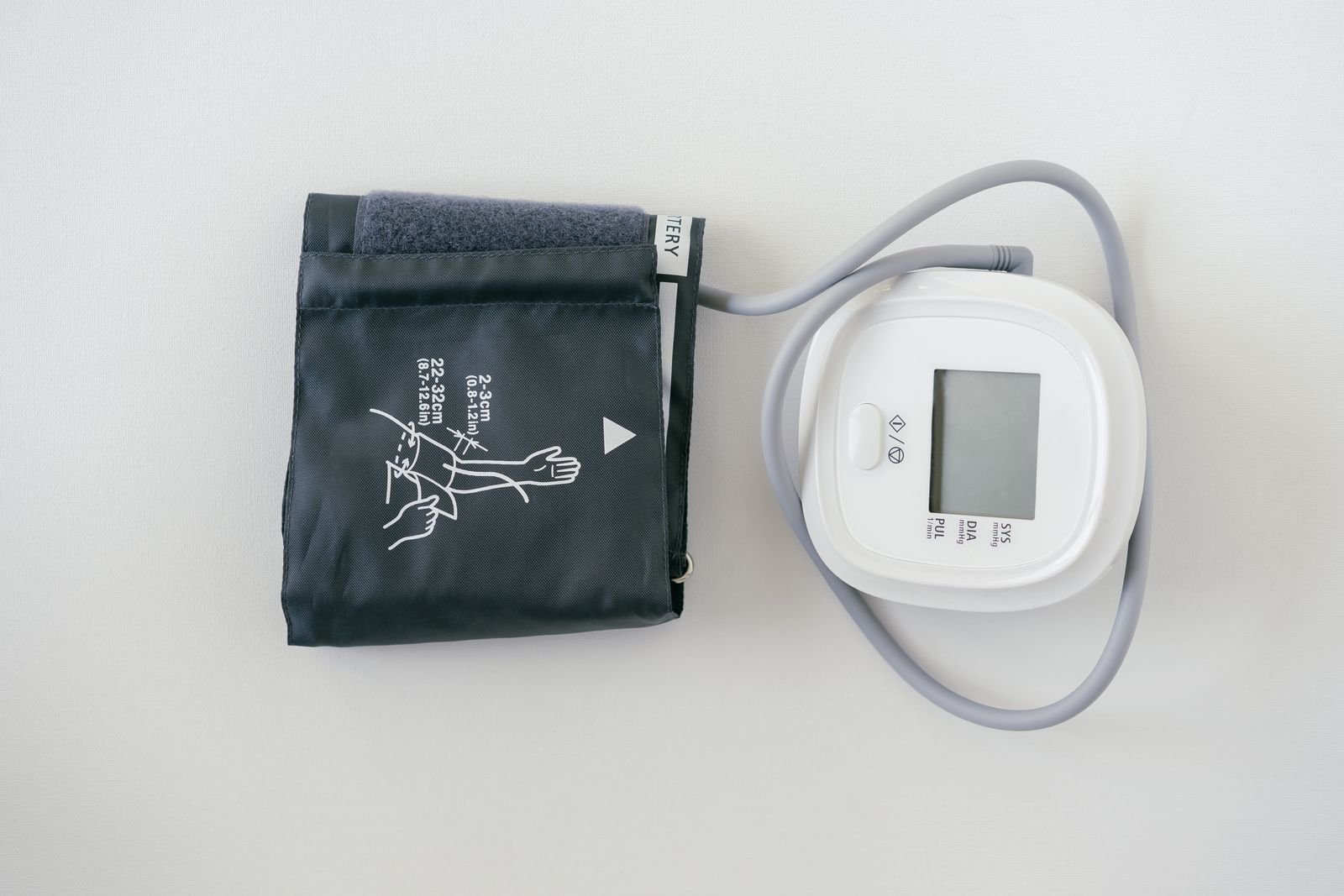
Rest for five minutes before you take a reading. Sit in a chair with your back supported. Put both feet flat on the floor. Do not cross your legs. Do not talk while the cuff is on. Put the cuff on your bare upper arm, not over a sleeve. Check that the cuff fits. A cuff that is too small can give a high reading. A cuff that is too large can give a low reading.
Take two readings, a minute apart. Write both down. The first reading is often the highest. Check both arms the first time you use a new monitor. Use the arm with the higher reading from then on. If the two arms differ by more than 20 mmHg in the top number, or more than 10 mmHg in the bottom number, tell your GP. That gap can point to a problem with blood flow in one arm.
Take readings at the same time each day, morning and evening, for seven days if your GP asks for a home average. Leave out the first day’s readings, then average the rest. That average is more useful than a single reading. Use a validated monitor. The British and Irish Hypertension Society keeps a list of validated blood pressure monitors.
Some things can push a reading up just before a check. Avoid them where you can:
- Caffeine in the hour before
- Smoking in the hour before
- A full bladder
- A recent meal
- Exercise in the last 30 minutes
- Talking during the reading
What to do with your reading
- Below 120/80 mmHg, and you feel well: your reading is in the ideal range. If you are 40 or over and have not had your blood pressure checked for more than 5 years, the NHS says to get it checked at a pharmacy or GP surgery. Many pharmacies offer free blood pressure checks for people aged 40 or over in England.
- 120/80 to 139/89 mmHg: your reading is above ideal, in the pre-high or slightly raised band. One reading in this range is not a diagnosis, but it is a prompt. Work on the lifestyle steps below, and get your blood pressure re-checked within a few months. If it stays in this range, or rises, book a GP appointment.
- 140/90 mmHg or higher at a clinic, or 135/85 mmHg or higher at home, more than once: book a GP appointment. Do not start or stop any blood pressure medicine on your own. Your GP will usually ask you to check your blood pressure at home over the next few days, or to come back for another check, or to wear a 24-hour monitor.
- 180/120 mmHg or higher: rest for 5 minutes and take the reading again. If it is still this high, contact your GP practice today. When the practice is closed, call NHS 111 or use 111 online. Call 999 straight away if you have a high reading and any of these symptoms: chest pain or tightness, sudden weakness or numbness in your face, arm or leg, slurred speech, a severe headache, sudden changes in your vision, confusion, or severe shortness of breath.
What lowers blood pressure
Eat less salt. Aim for no more than 6 grams a day, about a teaspoon. Most of the salt we eat is already in food. Bread, cereals, cheese, processed meat, sauces and ready meals are the main sources. Check labels and choose lower salt options where you can.
Keep to a healthy weight. Even a small loss can help. Aim for at least 150 minutes of moderate activity a week. That can mean brisk walking, cycling or swimming.
Drink less alcohol. Keep to no more than 14 units a week, spread over three or more days. Have some alcohol free days each week. Stop smoking if you smoke. Smoking raises blood pressure and harms your heart and blood vessels. Your GP or pharmacist can help you quit.
Sleep and stress matter too. Poor sleep and long term stress can keep blood pressure up. Our guide on how to sleep better naturally gives practical steps you can try at home. For a fuller set of steps, see our guide on how to lower blood pressure naturally. Do not buy a supplement and expect it to fix a high reading. No supplement is a substitute for the steps above, or for medicine your GP has prescribed. If you are thinking about a supplement, ask a pharmacist or your GP first.
Low blood pressure
Low blood pressure is a reading below 90/60 mmHg. For many people it is normal and causes no problems. It can be a sign of good heart health in fit, healthy people. See your GP if low readings come with dizziness, light headedness, fainting, blurred vision, or feeling sick.
Stand up slowly, especially when you get out of bed. Drink enough water through the day. Avoid standing for long periods in the heat. If you take blood pressure medicine and you feel faint, do not stop the medicine on your own. Speak to your GP or pharmacist first. Tiredness can have many causes. Our guide on vitamin D deficiency symptoms explains one common cause.
Frequently asked questions
Is 140/90 normal at 60?
No. A clinic reading of 140/90 mmHg is the line for high blood pressure at any adult age, including at 60. It is common at 60, but common is not the same as normal. If your reading is 140/90 mmHg or higher more than once, book a GP appointment.
What is normal blood pressure for a 70 year old woman in the UK?
The ideal range is the same as for any adult: 90/60 to 120/80 mmHg. The British Heart Foundation healthy band is 90/60 to 130/85 mmHg. The NICE treatment target under 80 is below 140/90 mmHg at a clinic, or below 135/85 mmHg at home. At 70, a reading of 135/82 mmHg is slightly raised, not high. A reading of 145/88 mmHg is high, and needs a GP appointment.
Is 135/85 high at home?
Yes, at home. The NHS counts a home reading of 135/85 mmHg or higher as high. The clinic line is 140/90 mmHg, and the home line is 5 points lower. A single home reading of 135/85 mmHg is not a diagnosis on its own. Take more readings over the next few days, work out the average, and book a GP appointment if the average stays at or above 135/85 mmHg.
Why is my first reading higher than my second?
The first reading is often the highest. You may still be settling after walking in, talking, or putting the cuff on. Rest for 5 minutes before the first reading, sit quietly, and take two readings a minute apart. The second reading is usually closer to your true resting pressure.
How often should I check my blood pressure?
If your readings have been normal, the NHS says to get your blood pressure checked at least once every 5 years, and more often if you are 40 or over. If your readings have been slightly raised, re-check within a few months. If you have high blood pressure, your GP will tell you how often to check. Checking every day when your readings are normal can cause worry without adding useful information.
Does blood pressure go up with age, and should my target go up too?
Average blood pressure does go up with age, because arteries stiffen. Your target should not go up with it. The ideal range of 90/60 to 120/80 mmHg applies at any adult age, and the high line of 140/90 mmHg at a clinic does not change with age. The only age split in the NICE treatment targets is 80 and over, where the target is below 150/90 mmHg at a clinic.
The ideal range does not rise with age, but averages do. Check your reading properly, using the steps in this guide. Act on the band your reading falls in. Speak to your GP if your reading is high more than once.
Sources and disclaimer
- NHS, High blood pressure (hypertension)
- NHS, Check your blood pressure reading tool
- NICE guideline NG136, Hypertension in adults
- British Heart Foundation, High blood pressure
- Blood Pressure UK, What do the numbers mean
- NHS England South East, raised blood pressure
Sources checked 14 Nov 2026.
This article is general information, not medical advice. It does not diagnose or treat any condition. If you are worried about your blood pressure, speak to your GP or pharmacist, or call NHS 111. If you have symptoms of a heart attack or stroke, call 999 straight away.