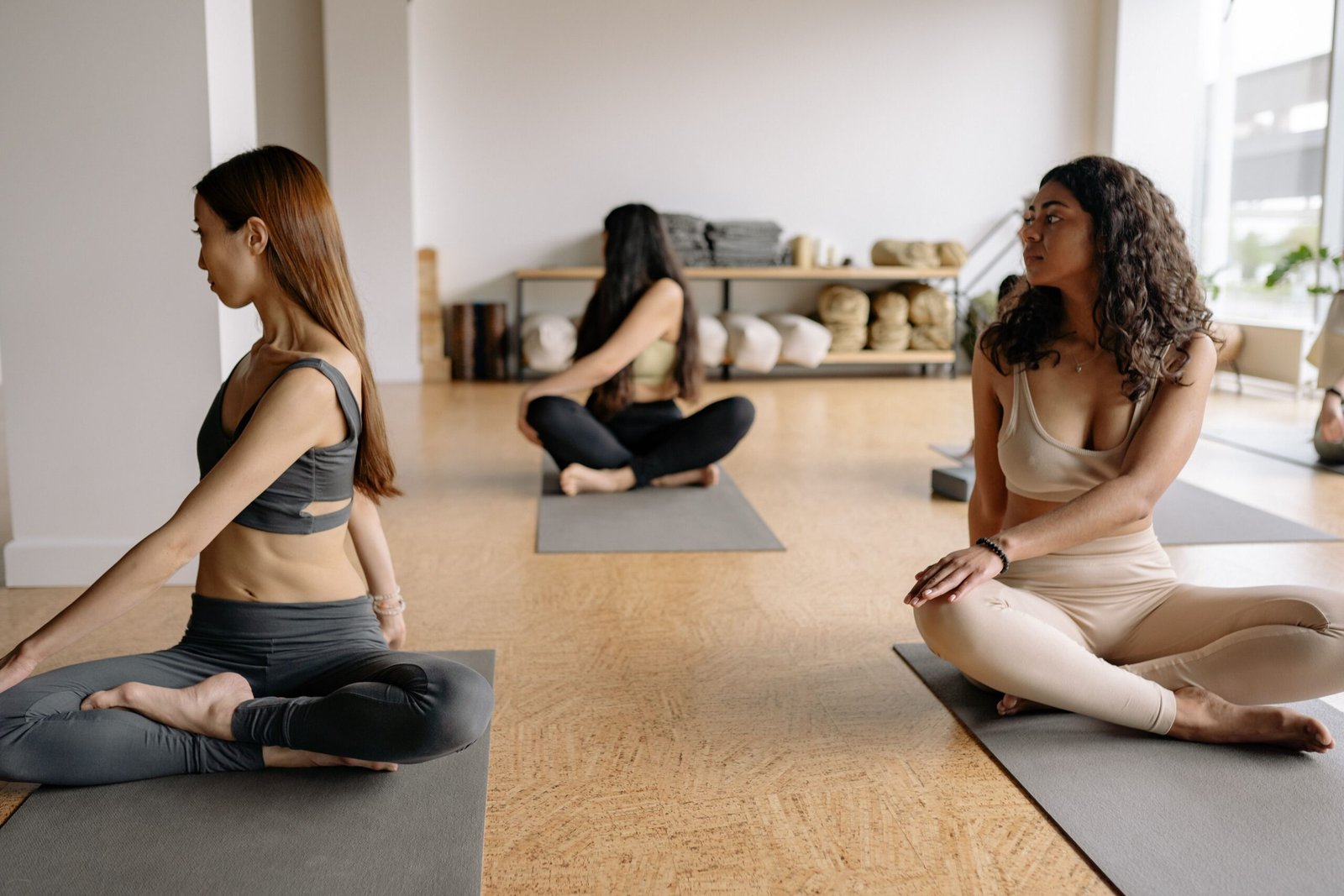
Hypermobility and pregnancy interact through relaxin, a hormone that rises during pregnancy and loosens ligaments throughout the body to prepare the pelvis for childbirth. For women who are already hypermobile, this hormonal loosening compounds joints that are naturally lax, increasing the risk of pelvic girdle pain, joint instability and injury. Yoga can help, but it needs to shift focus from stretching into flexibility toward building strength and joint stability.
What Is Hypermobility?
Hypermobility describes joints that move beyond the typical range of motion, caused by differences in collagen structure in the connective tissue that surrounds each joint. It affects around 20% of the population and exists on a spectrum, from mild flexibility in a few joints to Hypermobile Ehlers-Danlos Syndrome (hEDS), a heritable connective tissue disorder involving widespread joint laxity, skin elasticity and other systemic symptoms. Hypermobility is typically assessed using the Beighton score, a nine-point test measuring flexibility across the fingers, elbows, knees and spine.
How Relaxin Affects Hypermobile Joints During Pregnancy
Relaxin is produced by the corpus luteum and later the placenta, and it peaks in the first trimester before continuing to influence connective tissue throughout pregnancy. Its primary role is loosening the pubic symphysis and sacroiliac joints in the pelvis to allow the baby to pass through the birth canal. However, relaxin receptors exist throughout the body, not just the pelvis, which means shoulders, hips, wrists, knees and ankles can all experience increased laxity during pregnancy. For women who are already hypermobile, this represents what clinicians describe as a double hit: connective tissue that was already lax becomes looser still, at exactly the time the body is carrying additional weight and adapting to a shifting centre of gravity.
Increased Risks for Hypermobile Women During Pregnancy
- Pelvic girdle pain: research published in the Journal of Women’s Health Physical Therapy found hypermobile women experience pelvic girdle pain at significantly higher rates than non-hypermobile women (78% versus 37%), with earlier onset and longer persistence postpartum
- Sacroiliac joint instability: the SI joints, already prone to dysfunction in hypermobile bodies, face added strain from the combination of relaxin, growing weight and postural change
- Joint hyperextension injuries: knees and elbows are particularly vulnerable to locking or hyperextending during standing poses
- Prolonged postpartum recovery: relaxin remains elevated for 5 to 12 months postpartum, longer with breastfeeding, meaning joint instability does not resolve immediately after birth
How Yoga Should Change for Hypermobile Bodies
The central principle for hypermobile practitioners, pregnant or not, is shifting the goal from “how deep can I stretch” to “how stable can I be.” Passive, deep stretching that feels easy for a hypermobile body actively works against joint health during pregnancy, since it exploits laxity the body cannot yet control with adequate muscular strength.
- Work at 70-80% of maximum range, not full range, even in poses that feel comfortable to go deeper into
- Engage muscles actively during every stretch rather than passively sinking into a position
- Avoid locking or hyperextending joints, particularly the knees in standing poses and the elbows in weight-bearing poses like downward dog
- Prioritise strength-based poses over flexibility-focused ones, since stability comes from muscular support around a joint, not from stretching connective tissue that is already lax
- Use props strategically: blocks, bolsters and straps should support stability, not enable deeper stretching
Yoga Styles to Approach with Caution
| Style | Why It’s a Concern for Hypermobile Bodies |
|---|---|
| Yin yoga | Long-held passive stretches directly exploit joint laxity |
| Hot yoga | Heat increases tissue pliability, making overstretching easier and less noticeable |
| Deep backbends | Places significant load on an already lax spine and shoulders |
| Unsupported deep forward folds | Can strain the sacroiliac joint and lower back beyond a safe range |
Pregnancy-Specific Modifications by Trimester
| Trimester | Key Considerations |
|---|---|
| First | Relaxin peaks; begin shifting focus toward stability-based poses even before laxity is very noticeable |
| Second | Avoid lying flat on the back after 16-20 weeks, since this compresses the vena cava; centre of gravity begins shifting, increasing fall risk in balance poses |
| Third | Avoid unsupported standing balance poses, deep twists, and belly-down positions; favour side-lying, supported seated, and gentle standing poses with wall or chair support |
Poses to Avoid During Pregnancy with Hypermobility
- Deep, unsupported forward folds that place excess strain on the sacroiliac joints
- Wide-legged standing poses with hyperextended knees
- Deep twisting positions that compress the uterus
- Inverted positions, including headstands and shoulder stands
- Extreme end-range stretches that rely on relaxin-loosened ligaments rather than active muscular support
If joint stability is a broader concern beyond pregnancy, our guide to how to improve posture covers strength-based habits that support joint alignment in everyday movement, not just on the mat.
What Research Says About Exercise and Ligament Laxity in Pregnancy
A randomised controlled trial of 42 pregnant women examined an 8-week prenatal Pilates programme’s effect on ligamentous laxity and pelvic girdle pain. The exercise group showed no significant progression in ligament laxity, while the control group, which received standard prenatal care only, showed significant deterioration across all measured outcomes. This suggests that targeted, strength-focused movement, rather than exercise avoidance, is protective for hypermobile joints during pregnancy, though these findings apply specifically to structured, supervised programmes rather than unsupervised deep stretching.
When to Involve a Specialist
- Discuss hypermobility with your midwife or obstetric team early in pregnancy, ideally before symptoms become severe
- Seek prenatal physiotherapy if pelvic girdle pain develops, since targeted stability exercises can meaningfully reduce symptoms
- Work with a yoga instructor experienced in hypermobility or prenatal modifications, rather than a general prenatal class, if possible
- Plan for postpartum support, since joint instability does not resolve immediately after birth and can persist for many months, particularly while breastfeeding
Is Yoga Safe During Pregnancy If You’re Hypermobile?
Yes, with modifications. Yoga remains safe and beneficial for hypermobile women during pregnancy when the practice shifts toward strength and stability rather than flexibility, stays within 70-80% of maximum range, and avoids poses that place unsupported strain on the pelvis, spine or hyperextended joints. Stopping movement entirely is not typically recommended, since research indicates targeted exercise helps prevent, rather than worsen, ligament laxity progression during pregnancy.
Frequently Asked Questions
Does hypermobility get worse during pregnancy?
Existing joint laxity typically increases during pregnancy due to relaxin, though the degree varies between individuals. Symptoms often peak in the second and third trimesters as weight and postural changes compound the hormonal effect.
How long does joint laxity last after giving birth?
Relaxin levels typically remain elevated for 5 to 12 months postpartum, longer if breastfeeding, according to physiotherapy research. This means joint instability from pregnancy does not resolve immediately after delivery and warrants continued caution with high-impact or deeply stretching activity.
Can hypermobility affect labour and delivery?
Hypermobility can influence positioning choices during labour, since certain positions place more strain on already lax pelvic joints. Discussing hypermobility with your birthing team in advance allows a birth plan that accounts for joint protection.
Should I stop yoga altogether if I have hypermobility and I’m pregnant?
Not necessarily. Research supports strength-focused prenatal exercise as protective for joint stability, rather than harmful. The key is modifying the type of yoga practised, shifting from flexibility-focused styles toward strength and stability-based movement, ideally under the guidance of a knowledgeable instructor or physiotherapist.
This article is for general information only and is not a substitute for professional medical advice. Hypermobility and pregnancy both carry individual risk factors, so please consult your midwife, obstetrician or a physiotherapist before starting or modifying any exercise programme during pregnancy.
About the Author: Written by the Well Ideas editorial team, dedicated to researching and sharing practical, evidence-informed wellness guidance for a healthier everyday life.