
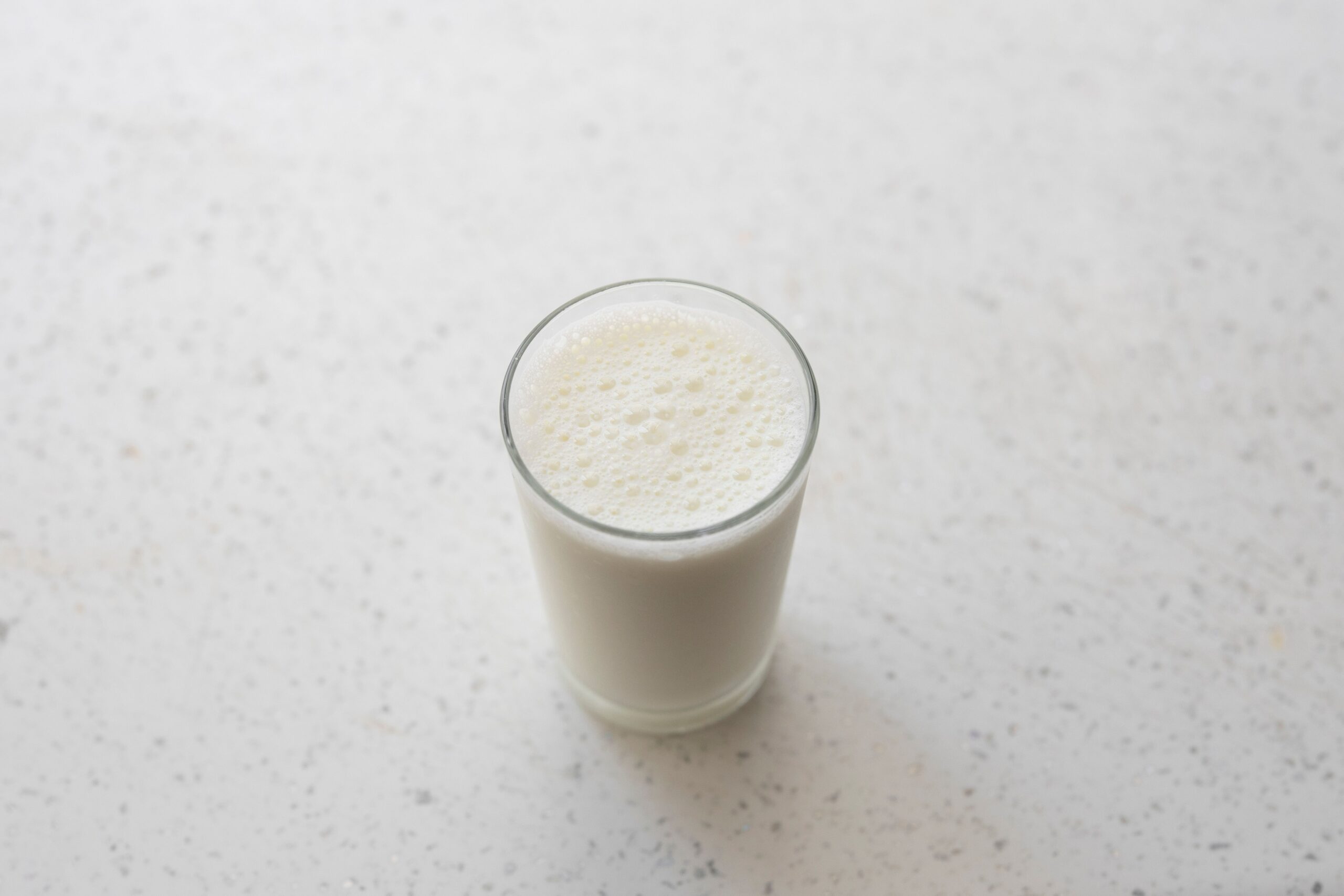
Semi-skimmed milk contains 46-50 calories, 3.3-3.6g protein, 1.6-1.8g fat and around 124mg calcium per 100ml. A standard 200ml glass provides roughly 94-100 calories, 7g protein and 248mg calcium, alongside vitamin B12, riboflavin, potassium and iodine. It sits between whole and skimmed milk, keeping most of the nutritional value of full-fat milk while cutting the fat content roughly in half.
Semi-Skimmed Milk Nutrition Facts (Per 100ml)
| Nutrient | Amount per 100ml |
|---|---|
| Calories | 46-50 kcal |
| Protein | 3.3-3.6g |
| Fat | 1.6-1.8g |
| Carbohydrates (lactose) | 4.6-5.1g |
| Calcium | ~124mg |
| Vitamin B12 | ~0.5mcg |
These figures are averages compiled from UK supermarket and dairy sources, since exact values vary slightly by brand and season. Semi-skimmed milk is defined by a fat content of roughly 1.5-1.8%, sitting between whole milk’s 3.5% and skimmed milk’s 0.1-0.3%.
Nutritional Value by Serving Size
| Serving Size | Calories | Protein | Calcium |
|---|---|---|---|
| 100ml | 46-50 kcal | 3.3-3.6g | 124mg |
| 200ml (glass) | 94-100 kcal | 7g | 248mg |
| 250ml (large glass) | 115-125 kcal | 8.3-9g | 310mg |
| 568ml (1 UK pint) | 260-284 kcal | 19-20g | 704mg |
Semi-Skimmed vs Whole vs Skimmed Milk
| Type | Fat (per 100ml) | Calories (per 100ml) | Calcium (per 100ml) |
|---|---|---|---|
| Whole milk | 3.5g | 64-65 kcal | 124mg |
| Semi-skimmed milk | 1.6-1.8g | 46-50 kcal | 124mg |
| Skimmed milk | 0.1-0.3g | 34-35 kcal | 124mg |
Calcium content stays essentially the same across all three types, since calcium sits in the water-based part of milk rather than the fat. Semi-skimmed milk cuts roughly 25-30% of the calories found in whole milk while retaining nearly all the same protein, calcium and vitamin B12.
Key Nutrients in Semi-Skimmed Milk
- Calcium: supports bone density and teeth strength; one glass provides roughly a third of an adult’s recommended daily intake
- Protein: contains all essential amino acids, supporting muscle repair and growth, with a 200ml glass providing around 7g
- Vitamin B12: essential for red blood cell production and nervous system function; a 200ml glass covers a significant share of the daily requirement
- Iodine: critical for thyroid function and brain development; milk is one of the UK’s primary dietary sources, and a small glass covers roughly half the daily recommended amount
- Riboflavin (vitamin B2): supports energy metabolism and healthy skin
- Potassium: supports healthy blood pressure and muscle function
Why Iodine in Milk Matters
Iodine is frequently overlooked in UK dietary conversations despite widespread underconsumption. The British Dietetic Association has flagged iodine as lacking in many people’s diets, particularly for pregnant women, since iodine deficiency during pregnancy is linked to developmental problems in babies. Cow’s milk, including semi-skimmed, is one of the most reliable natural sources of iodine in a typical UK diet; most plant-based milk alternatives contain negligible iodine unless specifically fortified.
Lactose: Not the Same as Added Sugar
Semi-skimmed milk naturally contains lactose, a milk sugar, at roughly 4.6-5.1g per 100ml. Lactose is not an added sugar and is treated differently from refined sugars by the NHS, WHO and Dairy UK, since it occurs naturally alongside protein, calcium and other nutrients rather than being added during processing. People with lactose intolerance may still need lactose-free alternatives, but the presence of lactose itself is not a health concern for most people.
Semi-Skimmed Milk vs Plant-Based Milk Alternatives
| Milk Type | Calories (100ml) | Protein (100ml) | Iodine |
|---|---|---|---|
| Semi-skimmed cow’s milk | 46-50 kcal | 3.3-3.6g | High (natural source) |
| Soya milk | 39-45 kcal | ~3g | Negligible unless fortified |
| Oat milk | 40-60 kcal | ~1g | Negligible unless fortified |
| Almond milk | ~13 kcal | ~0.5g | Negligible unless fortified |
Soya milk comes closest to matching semi-skimmed milk’s protein content among common plant-based alternatives; oat and almond milk are both substantially lower in protein and, unless fortified, contain little to no iodine.
Is Semi-Skimmed Milk Good for Weight Management?
Semi-skimmed milk fits comfortably into a calorie-controlled diet, providing meaningful protein and calcium at a moderate calorie cost compared to whole milk. Its protein and fat content also support satiety, helping reduce the urge to snack between meals, though the calorie difference compared to skimmed milk is minor, typically only a few calories per 100ml.
Semi-Skimmed Milk for Children
Whole milk is generally recommended for children under two, since younger children need the additional fat and calories for healthy growth and brain development. Semi-skimmed milk becomes a suitable option from around age two, provided the child’s growth and overall diet remain on track, and can be introduced gradually as part of a varied diet.
How Many Calories Are in a Pint of Semi-Skimmed Milk?
A UK pint (568ml) of semi-skimmed milk contains approximately 260-284 calories, based on the standard 46-50 calorie per 100ml range. This also provides around 19-20g of protein and 704mg of calcium, making a single pint a substantial contribution toward daily calcium and protein needs.
Frequently Asked Questions
Does semi-skimmed milk have as much calcium as whole milk?
Yes. Calcium content is essentially identical across whole, semi-skimmed and skimmed milk, at approximately 124mg per 100ml, since calcium is not removed along with the fat during processing.
How many calories are in a 250ml glass of semi-skimmed milk?
A 250ml glass contains approximately 115-125 calories, based on the standard 46-50 calorie per 100ml range, along with roughly 8.3-9g of protein and 310mg of calcium.
Is semi-skimmed milk suitable for a keto diet?
Not typically. Semi-skimmed milk contains around 4.6-5.1g of carbohydrates per 100ml, mostly from naturally occurring lactose, which can make it difficult to fit into strict keto macros. Unsweetened almond or coconut milk are lower-carb alternatives more commonly used on keto diets.
Why does semi-skimmed milk have the same calcium as whole milk but fewer calories?
Calcium and other water-soluble nutrients remain in the milk regardless of how much fat is skimmed off during processing. The calorie difference comes specifically from the reduced fat content, since fat is more calorie-dense than protein or carbohydrates.
This article is for general information only and is not a substitute for professional dietary advice. Nutritional values can vary slightly by brand; check the label on your specific product for exact figures, and consult a registered dietitian for personalised guidance.
About the Author: Written by the Well Ideas editorial team, dedicated to researching and sharing practical, evidence-informed wellness guidance for a healthier everyday life.