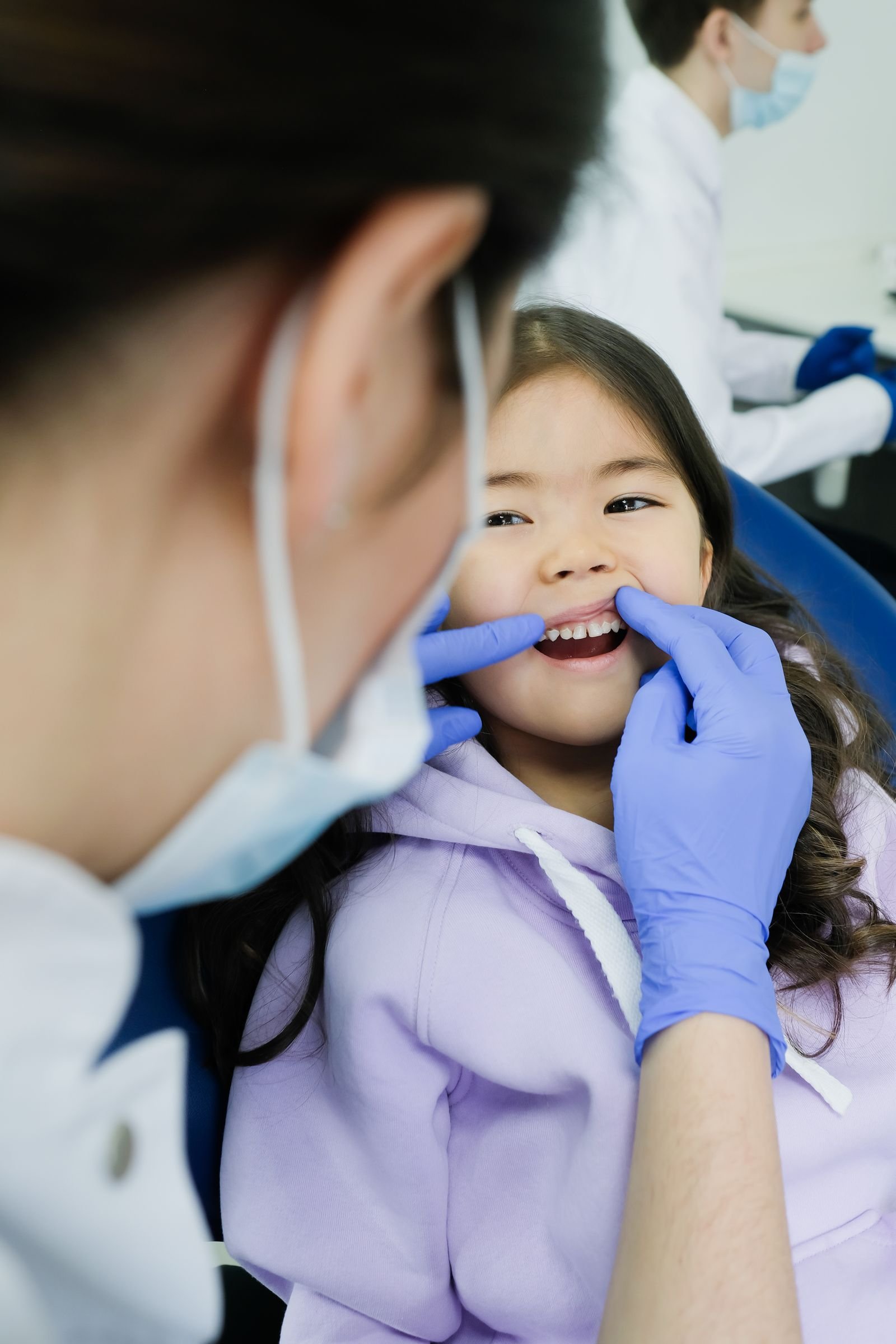
Yes, NHS dental treatment is free for children under 18 in England, and it stays free until 19 if your child is in full-time education. You pay nothing for the whole course of NHS treatment, whatever band an adult would pay for the same work.
The age is judged at the start of the course of treatment. If your child starts treatment at 17, that course is free even if they turn 18 while it is still going on. If your child is 18 and in full-time education at the start, that course is free too.
The rule is different in Scotland, where free NHS dental care extends to everyone under 26, and different again in Wales, where the examination is free under 25 but treatment follows the under 18, or 18 in full-time education, rule. The table below gives the four nations side by side, so check the row for where you live.
This article is about NHS treatment only. If your child is seen privately, private fees apply, even for a child under 18.
Free NHS dental treatment by age and UK nation
Table 1: Free NHS dental treatment by age and UK nation.
| Nation | Free treatment | Free examination | What changes at 18 |
|---|---|---|---|
| England | Under 18, or under 19 in full-time education | Included in the free course, no separate charge | At 18, free treatment stops unless your child is in full-time education, pregnant, on a qualifying benefit, or a dependant under 20 of someone on a qualifying benefit |
| Scotland | Under 18, and free NHS dental care extends to everyone under 26 | Included in the free course, no separate charge | At 26, the adult rule applies, and most adults pay 80 percent of the treatment cost up to a maximum of 384 pounds |
| Wales | Under 18, or 18 in full-time education | Free if under 25, or 60 or over, on the day of the examination | At 18, free treatment stops unless your child is in full-time education, and the free examination stops at 25 |
| Northern Ireland | Under 18, or 18 in full-time education | Included in the free course, no separate charge | At 18, free treatment stops unless your child is in full-time education |
The England, Scotland and Wales rows are from NHSBSA, NHS Dorset and Dental Scotland, checked on 18 Nov 2026. The Northern Ireland row is verified against nidirect and the Health and Personal Social Services (Northern Ireland) Order 1972, Schedule 15A.
What is covered, and what is not covered
For a child under 18, free NHS treatment covers the full course of clinically necessary treatment. That includes check-ups, X-rays, fillings, extractions, fissure sealants, fluoride varnish, and emergency treatment. It also includes orthodontic treatment, braces, if your child meets the clinical need threshold, which is covered in the orthodontics section below.
Fissure sealants are a thin protective coating painted onto the back teeth to seal the deep grooves where food and plaque collect. They are particularly useful for children prone to cavities. Fluoride varnish is applied directly to the teeth to strengthen enamel, and is recommended every six months for children at higher risk of decay.
What is not covered is private treatment and cosmetic treatment. If you choose private care for your child, you pay the private fee, even though the same treatment would have been free on the NHS. Cosmetic orthodontics, treatment done only to improve appearance with no dental health need, is not covered on the NHS. Standard NHS braces use metal brackets. Clear brackets may incur an additional private charge, so ask before you agree.
The age edge: turning 18, turning 19, and full-time education
This is the part parents most often get wrong, so it is worth going slowly.
Under 18 is simple. If your child is 17 at the start of a course of treatment, that course is free. It stays free even if they turn 18 during the course, because eligibility is judged at the start, not at the end.
Under 19 in full-time education is the next step. If your child is 18 at the start of a course and is in full-time education, that course is free. The education must be qualifying full-time education, which means full-time secondary or further education, such as school or college. Ask the practice what proof it needs, because the practice has to record the exemption on the NHS claim form.
Once your child turns 19, the age exemption ends, even if they are still in full-time education. From 19, they need another reason to get free treatment, such as a qualifying benefit, a valid HC2 certificate from the NHS Low Income Scheme, or being a dependant under 20 of someone on a qualifying benefit.
If your child is 18 and not in full-time education, the age exemption has ended. They will pay the adult Band charge for a course of treatment in England, which from 1 April 2026 is 27.90 pounds for Band 1, 76.60 pounds for Band 2, and 332.10 pounds for Band 3, unless they qualify another way. That is why the 18th birthday matters, and why it is worth starting a course before it if treatment is already planned.
Parents have their own exemption too. NHS treatment is free while you are pregnant and for 12 months after your baby is born, so book your own check-up at the same time as your child’s if that applies to you.
What proof to bring
Table 2: What proof to bring, by situation.
| Situation | What to bring | Why it is needed |
|---|---|---|
| Child under 18 | Birth certificate, passport, or another official document with the date of birth, if the practice asks | The practice needs to confirm age, and the dentist may ask for proof that you can get free treatment |
| Child 18 in full-time education | Current Child Benefit award notice, proof of date of birth, and proof of study from the school, college or local education authority | The practice has to record that the 18 year old is in qualifying full-time education on the NHS claim form |
| Child of someone on a qualifying benefit | The benefit award letter, or the valid HC2 certificate | The exemption comes from the benefit, not from age, so the practice needs to see it |
| No proof available | Do not tick the exemption box until you have checked | If you say you do not have to pay but you are not eligible, you could get a Penalty Charge Notice of up to 100 pounds, plus the cost of your treatment |
For most children under 18, the dentist will confirm age from the record and no benefit proof is needed. The proof matters most at the edge, at 18 in full-time education, and when the exemption comes from a benefit rather than age. If you are unsure, use the NHSBSA eligibility checker before the appointment, and bring the document with you rather than relying on memory.
First visit, how often, and what a check-up includes
Take your child to the dentist as soon as the first tooth appears, and by their first birthday at the latest. That is the Dental Check by One programme, and it is the NHS advice for every child. The first visit is usually short. The dentist will look at the teeth, talk about brushing, diet and fluoride, and get your child used to the chair.
There is no fixed six-month rule for children. NICE guidance says the gap between check-ups should be no more than 12 months for under-18s, and as short as 3 months if the child is at higher risk of decay or adult teeth are coming through. Your dentist will set the interval from the health of your child’s teeth and gums, and will tell you what is right for your child rather than applying the same interval to everyone.
A check-up for a child includes an examination of the teeth, gums and mouth, advice on brushing and diet, and, if needed, X-rays, fluoride varnish or fissure sealants. The dentist will also watch how adult teeth are coming through, and will flag any concern about spacing, crowding or bite as it arises. You do not need to wait until your child is a teenager to start the conversation about braces.
If your child is in pain, do not wait for the next routine check-up. Use the urgent route in our emergency dentist guide. For an exempt child, urgent NHS treatment is free too, because the exemption covers the whole course, not just routine care.
Orthodontics: are braces free on the NHS?
NHS braces are free for under-18s who meet the clinical need threshold. The dentist measures your child’s teeth using the Index of Orthodontic Treatment Need, known as IOTN. Your child qualifies if they score 3.6 or above. Qualifying conditions include significant crowding or prominent teeth in excess of 6mm. Treatment is funded because it will improve dental health, not just appearance.
An assessment is usually worth doing around age 11 to 13, once most adult teeth are through. The dentist will tell you if it is something to watch, something they can help with, or something better handled by a specialist orthodontist. If NHS treatment is likely to be appropriate, an early assessment means an earlier referral and a shorter wait.
Orthodontic treatment usually takes 18 to 24 months, followed by a period in which retainers must be worn. Braces will usually need to be adjusted every 6 to 12 weeks. All patients aged 18 and under are eligible for an NHS clinical assessment once they have been referred by their dentist, and the NHS funds all the work done at the orthodontic centre.
If your child does not meet the IOTN threshold, the NHS will not fund braces, and private treatment is the only option. That does not mean the teeth are fine, it means the need is not severe enough for NHS funding. Ask the dentist to explain the score, so you can decide with the facts in front of you.
How to find an NHS dentist for a child
Use the NHS dentist finder, then call the practice to confirm it is taking new child patients. A practice can be listed as NHS and still not be taking new patients at that time, for adults or for children, so the call matters more than the listing.
Our guide to finding an NHS dentist accepting new patients gives the exact phone script, what to ask, and what to do while you wait, including the Integrated Care Board and Healthwatch steps if no practice nearby can take your child. The same steps work for a child, and you should say on the call that you are looking for a place for a child, because some practices keep separate lists for children.
If your child has more complex or significant treatment needs, community dental services can help. These are provided by NHS trusts, and your dentist or GP can refer your child to them. If your child has a disability or a medical condition that makes a normal practice visit difficult, say so on the first call, so the practice can plan the visit properly.
Frequently asked questions
Is NHS dental treatment free for my child?
Yes, if your child is under 18, or under 19 and in full-time education, in England. The same age rule applies in Wales and Northern Ireland for treatment, and Scotland extends free NHS dental care to everyone under 26. Free means the whole course of NHS treatment, including check-ups, fillings, extractions and clinically necessary orthodontics.
What age does free treatment stop?
In England, free treatment on age alone stops at 18, unless your child is 18 and in full-time education, in which case it stops at 19. After that, your child needs another exemption, such as a qualifying benefit or a valid HC2 certificate, or they pay the adult Band charge.
Does my 18 year old in college still get free treatment?
Yes, if they are 18 and in full-time education at the start of the course of treatment. Bring proof of study from the school or college, proof of date of birth, and a current Child Benefit award notice if you have one. Full-time education means full-time secondary or further education, such as school or college.
What proof do I need?
For a child under 18, a birth certificate or passport if the practice asks. For an 18 year old in full-time education, proof of date of birth and proof of study. For an exemption through a benefit, the benefit award letter or a valid HC2 certificate. If you are unsure, check with the NHSBSA eligibility checker before the appointment.
Are braces free on the NHS?
Yes, for under-18s who meet the clinical need threshold, an IOTN score of 3.6 or above. The dentist refers your child to an NHS orthodontist, and the NHS funds the assessment, the braces, the adjustments and the initial retainers. Cosmetic orthodontics, and clear brackets instead of metal ones, may incur a private charge.
What if my child turns 18 during treatment?
That course stays free, because eligibility is judged at the start of the course of treatment. The same applies to an 18 year old in full-time education who turns 19 during a course. Tell the practice the date of birth at the first appointment, so the exemption is recorded correctly.
Sources and disclaimer
- NHSBSA, What entitles me to free NHS dental treatment
- NHS Dorset, Dental services
- NHS, Who can get free NHS dental treatment in England
- Dental Scotland, Children’s Dental Care Scotland 2026
- North Cardiff Orthodontic Centre, For Parents
South West London Healthier Together, Accessing dental care, babies; NICE CG19, Dental checks, intervals between oral health reviews.
This article is general information, not medical advice. It does not diagnose or treat any condition. Check your eligibility before you tick the exemption box, because a wrong claim can bring a Penalty Charge Notice of up to 100 pounds, plus the cost of your treatment. Speak to your dentist or GP if you are worried about your child’s teeth, or if your child is in pain.