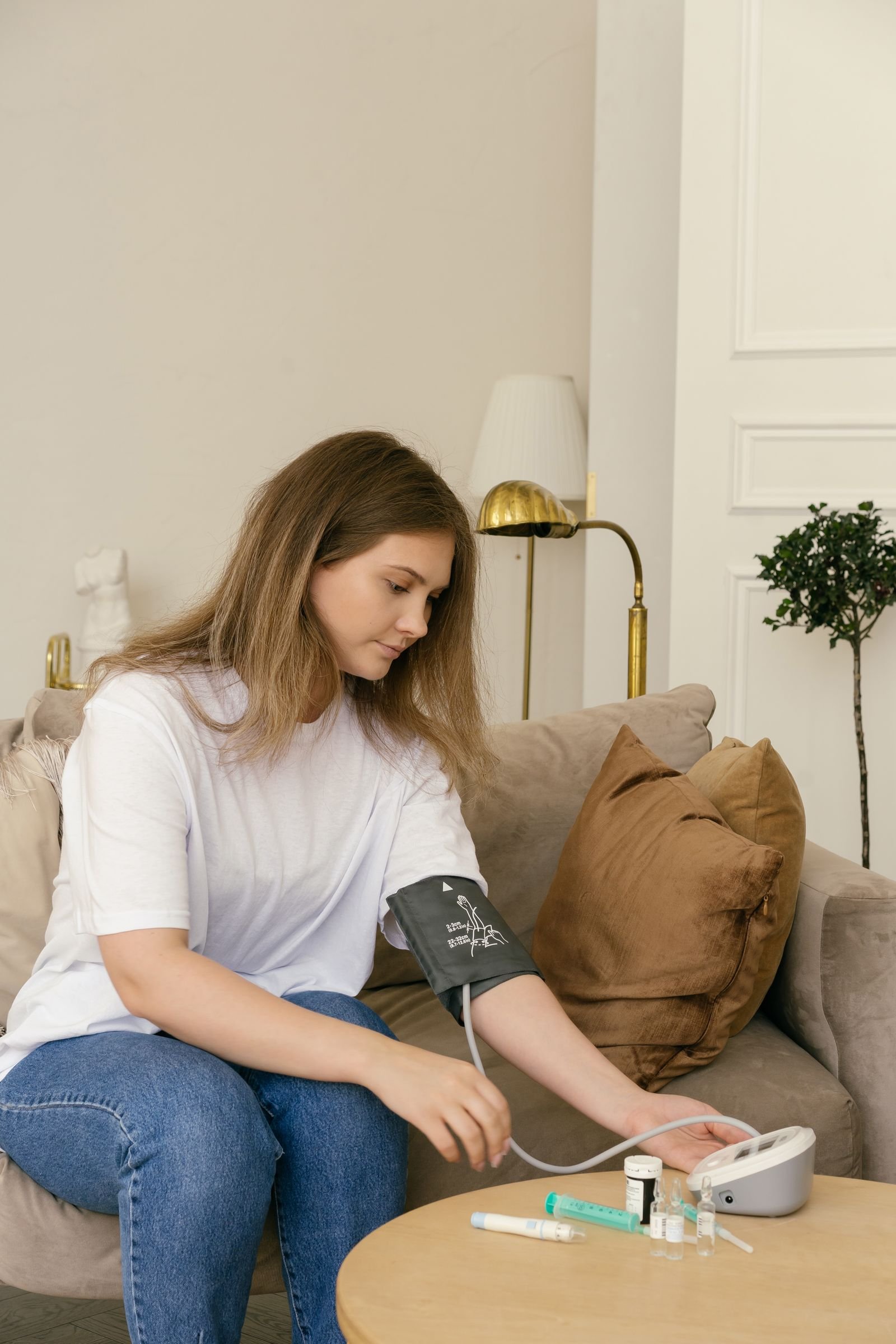
There is no safe way to drop your blood pressure by a large amount in minutes at home. Anyone who promises that is selling you something. What you can do in minutes is calm a stress spike, take a proper reading, and find out whether your blood pressure is really high or just high right now.
Real falls take days and weeks. Cutting salt, eating in a DASH pattern, walking every day, losing weight if you are overweight, and drinking less alcohol all lower blood pressure. The size of the fall depends on how high your starting point is and how closely you follow the changes. A person with a reading of 160/100 will usually see a bigger fall than a person with a reading of 142/92.
Blood pressure medicine is part of the picture too. If your blood pressure is very high, or if lifestyle changes alone do not bring it down, your GP may offer you medicine. That is not a failure of diet. It is how the two work together. Never stop or change blood pressure medicine because a home reading looks better. That decision needs your GP.
Your numbers: clinic, home, and what they mean
Table 1: Your blood pressure numbers, and what they mean.
| Reading | Clinic (checked by a healthcare professional) | Home (your own average) |
|---|---|---|
| Normal | Below 120/80 | Below 120/80 |
| Raised, at risk | 120/80 to 139/89 | 120/80 to 134/84 |
| Stage 1 high blood pressure | 140/90 to 159/99 | 135/85 to 149/94 |
| Stage 2 high blood pressure | 160/100 to 179/119 | 150/95 or higher |
| Severe, needs same day advice | 180/120 or higher | 180/120 or higher |
Blood pressure is given as two numbers, for example 130/80. The first number is systolic, the pressure when the heart pushes blood out. The second number is diastolic, the pressure when the heart rests between beats. Both numbers matter, and your GP looks at both.
Home readings are judged against a lower line than clinic readings, because most people are calmer at home. That is why a home average of 135/85 counts as high, while a clinic reading needs to reach 140/90. Our normal blood pressure guide explains what each reading means by age in full.
One number on its own does not diagnose high blood pressure. Blood pressure goes up and down through the day, and it rises for a short time when you are stressed, anxious, in pain, or have just exercised. A diagnosis needs repeated readings, and your GP will usually ask you to measure at home for a week or wear a 24 hour monitor before deciding.
What works, and when
Table 2: What works, and when.
| When | What to do | What it does |
|---|---|---|
| In minutes | Sit quietly for 5 minutes, breathe slowly, then recheck | Calms a stress spike and gives a truer reading |
| Today | Skip the salt at the table, drink water instead of alcohol, walk for 30 minutes | Removes the things pushing your reading up today |
| In days | Cook from scratch, cut processed food, eat more vegetables and wholegrains | Salt falls, potassium rises, and the average starts to move |
| In weeks | Follow a DASH pattern, walk daily, do wall squats, lose weight if needed | The average falls by a useful amount, and keeps falling |
| Ongoing | Take your medicine as prescribed, check your average weekly | Keeps the fall, and shows your GP whether it is working |
This table is the whole article in one place. The rest of it explains each row, and why the order matters. Start with a proper reading, then work through the rows in order.
What blood pressure is, and why it rises
Blood pressure is the pressure of blood in your arteries. Your heart pumps blood around your body, and the arteries carry it. When the arteries are narrow or stiff, the pressure rises, and the heart has to work harder.
Age is the biggest reason blood pressure rises. Arteries stiffen as we get older, and that is why high blood pressure is very common in older adults. Family history matters too, and so does ethnicity: people with a Black African, Black Caribbean or South Asian background are at higher risk.
The things you can change are salt, weight, alcohol, exercise, smoking and stress. A diet high in salt raises blood pressure. Being overweight raises it. Drinking too much alcohol raises it. Sitting still all day raises it. Smoking raises it. Feeling stressed over a long period raises it. None of these is the single cause, and that is why the fix is a set of small changes, not one trick.
High blood pressure usually has no symptoms. You can feel perfectly well and still have a reading of 160/100. That is why it is called a silent condition, and why a check matters more than how you feel. Around a third of adults in the UK have high blood pressure, and millions of them do not know it.
Measure it properly first
Before you try to lower your blood pressure, find out what it really is. A single reading taken badly can be 10 or 20 points higher than your true average, and acting on a wrong number wastes your effort.
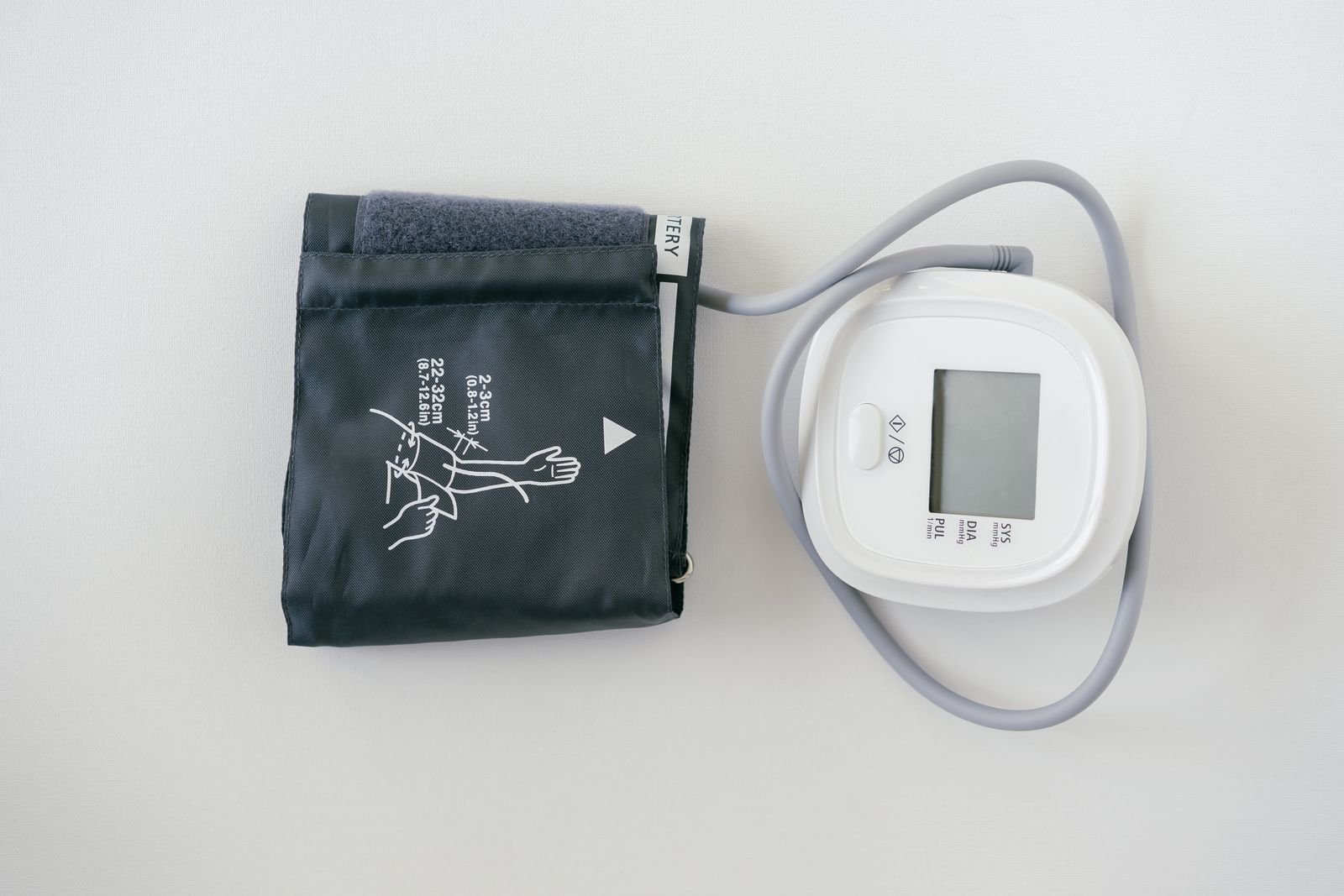
Use a validated upper arm monitor, with a cuff that fits your arm. Wrist monitors are less reliable, and finger monitors are not used at all. Ask your pharmacist which monitors are validated, or check the British and Irish Hypertension Society list.
Sit with your back supported, feet flat on the floor, legs uncrossed, and your arm supported on a table at heart level. Rest quietly for at least 5 minutes first. Do not smoke, drink caffeine or exercise within 30 minutes of a reading, and do not measure straight after a large meal. Stay still and do not talk while the reading is taken.
Take two readings at least 1 minute apart, twice a day, once in the morning and once in the evening, for at least 4 days and ideally 7 days. Ignore the first day of readings, because the first day is usually higher while you get used to the monitor, and average the rest. That average is your home blood pressure, and it is the number your GP wants.
Write every reading down, with the date and time, and do not round the numbers up or down. Bring the list to your GP appointment. If your readings are very different between your two arms, tell your GP, and use the arm with the higher reading.
Many pharmacies offer free blood pressure checks for people aged 40 or over. Adults in England aged 40 to 74 are also invited for a free NHS Health Check every five years, which includes a blood pressure check.
In minutes: sit, breathe, recheck
If your reading is high, do not panic, and do not take an extra dose of medicine. Sit down somewhere quiet, with your back supported and your feet flat on the floor. Put your phone away. Breathe slowly, in through your nose and out through your mouth, at fewer than 10 breaths a minute, for at least 5 minutes. Then take the reading again, properly, with your arm supported at heart level.
Slow breathing can lower a stress driven spike by a few points in the moment, because it calms the nervous system. A meta-analysis of slow breathing interventions found modest falls in blood pressure over time. It is not a treatment for high blood pressure, and it will not bring a reading of 170/110 down to normal. But it will tell you whether your reading was a spike or a true average, and that is worth knowing.
Do not do any of these things. Do not take someone else’s blood pressure tablets. Do not take an extra dose of your own tablets. Do not drink alcohol to calm down, because alcohol raises blood pressure at first and can then push it too low. Do not do heavy exercise to bring it down, because exercise raises blood pressure while you are doing it. Do not keep taking readings every few minutes, because watching the numbers rise will make you more anxious, and anxiety raises blood pressure.
If your reading is 180/120 or higher, the rules change. See the emergency section at the end of this article. Do not sit and breathe and wait if you have chest pain, shortness of breath, blurred vision, confusion, or weakness on one side of your body. Call 999.
Today: salt, caffeine, alcohol, a walk, and sleep tonight
Today’s changes are the easiest, because they are about removing things that push your reading up, not adding new habits.
Salt first. Adults should eat no more than 6g of salt a day, about a level teaspoon in total. Most of us eat about 8g a day, and about three quarters of it is already in bought food. Do not add salt at the table, and do not add it while cooking. Check labels for salt per 100g: 0.3g or less is low, 0.3g to 1.5g is medium, and 1.5g or more is high. Bread, soup, cheese, bacon, sausages, ready meals and takeaways are the biggest sources, and they are the ones to swap first.
Caffeine second. Coffee, tea and cola all raise blood pressure for a short time. The NHS says do not drink too much caffeine. If you drink a lot of coffee, cut back gradually rather than stopping all at once, because stopping suddenly can give you a headache. Do not measure your blood pressure within 30 minutes of caffeine.
Alcohol third. Keep to no more than 14 units a week, spread over 3 or more days, with several drink free days each week. A unit is about half a pint of beer, a small glass of wine, or a single measure of spirits. Alcohol raises blood pressure, and it also makes weight loss harder and sleep worse, so it works against you three ways.
Movement fourth. Walk for 30 minutes today, at a brisk pace, where you can talk but not sing. A walk after lunch is a good start. It does not need to be a gym session, and it does not need special clothes. A walk to the shops, a walk around the park, or a walk up and down the stairs at home all count.
Sleep tonight. Adults need 7 to 9 hours of sleep a night. Poor sleep raises stress hormones, and stress hormones raise blood pressure. Aim for a regular bedtime, a wind down hour without screens, and a cool, dark bedroom. If you wake in the night, do not eat a salty snack to get back to sleep.
In days: the DASH pattern, and the salt you do not see
The DASH eating pattern, which stands for Dietary Approaches to Stop Hypertension, is the best studied diet for blood pressure. It is rich in fruit, vegetables, wholegrains, pulses, nuts and low fat dairy, and low in salt, saturated fat, red meat and added sugar. It is close to the NHS Eatwell Guide, so it fits UK shopping and UK portions.
In the original DASH trial, published in the New England Journal of Medicine in 1997, the pattern lowered systolic blood pressure by 8 to 14 mmHg in people with hypertension, with effects seen within about two weeks. That is a trial result, not a promise. The fall is smaller if your blood pressure is only slightly raised, and it depends on how closely you follow the pattern. But it is the largest fall of any single food change, and it is larger than many single medicines.
A DASH day looks like this. Breakfast: porridge made with semi-skimmed milk and berries, or wholemeal toast with a boiled egg. Lunch: lentil soup with wholemeal bread, or a wholemeal pitta with hummus and salad. Dinner: grilled chicken or salmon, boiled new potatoes, broccoli and carrots, with half the plate vegetables. Snacks: an apple, a banana, or a small handful of unsalted nuts. Drinks: water, or tea without sugar.
The salt you do not see is the hard part. Bread is the biggest single source of salt in the UK diet, because we eat so much of it. A slice of bread has about 0.4g of salt, so four slices is more than a quarter of your daily limit before you have eaten anything else. Soup, cheese, bacon, sausages, ready meals, sauces and takeaways are the others. Cook from scratch when you can, so you control the salt. Use herbs, spices, lemon, garlic and chilli for flavour instead.
Potassium helps too. Fruit, vegetables, beans, lentils and low fat dairy are rich in potassium, and potassium helps the body get rid of salt. That is one reason the DASH pattern works: it cuts salt and raises potassium at the same time. Do not use a potassium salt substitute, such as Lo Salt, without asking your GP first, because extra potassium is not safe for people with kidney disease or heart failure.
The same eating changes help your cholesterol too, because high blood pressure often travels with high cholesterol. Our cholesterol diet plan explains the same food swaps in more detail.
In weeks: weight, exercise, and the wall squat evidence
Weight matters. If you are overweight, losing even 5 percent of your body weight can help lower your blood pressure. For a person who weighs 90 kg, that is 4.5 kg. A steady loss of 1 to 2 lbs a week is ideal, and it is the loss you keep off that matters, not a crash diet you abandon in a month. The NHS Better Health website has free tools and support to help you lose weight, get active, quit smoking and drink less.
Exercise is the other big lever. Aim for at least 150 minutes of moderate activity a week, such as brisk walking, cycling or swimming, plus muscle strengthening on at least two days. Moderate means you can talk but not sing. Being active can help your blood pressure even if the scales barely move, because it makes your arteries more flexible.
The surprise in the evidence is isometric exercise. Isometric exercise means holding a muscle still without moving, such as a wall squat or a handgrip hold. In a large meta-analysis of 270 randomised controlled trials with 15,827 people, published in the British Journal of Sports Medicine in 2023, isometric exercise lowered resting blood pressure by 8.24/4.00 mmHg on average, the largest fall of any exercise type. Aerobic exercise lowered it by 4.49/2.53 mmHg. The wall squat was the most effective single exercise for systolic pressure.
A wall squat is simple. Stand with your back flat against a wall, walk your feet about 45 cm from the wall, shoulder width apart, and slide down until your knees are bent, as if you are sitting on an invisible chair. Hold for 2 minutes, rest for 2 minutes, and repeat 4 times. Do that three times a week. Start with a shallower squat if 2 minutes is too long, and build up. Stop if you feel dizzy, chest pain or shortness of breath.
One warning matters. Only 18 of the 270 trials in that meta-analysis studied isometric exercise, and none compared it directly with other exercise types, so the finding is promising but based on fewer trials. Do not do heavy exercise, including wall squats, without medical advice if your blood pressure is above 160/110. If you take blood pressure medicine, talk to your GP before you change your exercise sharply.
Beyond food: sleep, stress, alcohol and smoking
Sleep matters more than most people expect. Poor sleep raises stress hormones, and stress hormones raise blood pressure, even if you have not eaten badly. Aim for a regular bedtime, a wind down hour without screens, and 7 to 9 hours if you can. If you snore loudly and feel tired in the day, tell your GP, because sleep apnoea, where breathing stops briefly during sleep, raises blood pressure and needs treatment.
Stress works the same way. A short daily walk, slow breathing, or a few minutes of quiet time will not cure high blood pressure, but it will lower the stress hormones that push it up. If stress is constant, talk to your GP. It is a health issue, not a failure of willpower.
Alcohol raises blood pressure, and the effect builds over days, not just hours. Keep to no more than 14 units a week, spread over 3 or more days, with several drink free days each week. Never drink on an empty stomach, and do not use alcohol to help you sleep, because it makes sleep worse.
Smoking makes blood pressure worse, and it raises the risk of heart disease, stroke and the complications of high blood pressure. Stopping smoking is one of the best things you can do for your heart, and your GP can offer help and support, including nicotine replacement and stop smoking services.
When lifestyle alone is not enough
Lifestyle changes may not be enough, and that is not a failure. Some people have blood pressure that stays high whatever they eat, because of age, family history, or kidney disease. Some people need medicine from the start, because their blood pressure is very high or their overall risk is high.
Your GP will look at your average, not just one reading, and at your overall risk. NICE guidance says the target is below 140/90 in clinic, or below 135/85 at home, for adults under 80, and below 150/90 in clinic, or below 145/85 at home, for people aged 80 and over. Your own target may differ, so agree it with your GP rather than comparing it with a figure from another person.
NICE says to offer medicine to adults of any age with persistent stage 2 hypertension, and to discuss starting medicine with adults under 80 with persistent stage 1 hypertension who have target organ damage, heart disease, kidney disease, diabetes, or a 10 year risk of cardiovascular disease of 10 percent or more. The medicine depends on your age, your ethnicity and your other conditions. Common types are ACE inhibitors such as ramipril, calcium channel blockers such as amlodipine, and diuretics such as indapamide. Most are taken as tablets once a day, and you may need more than one to keep your blood pressure under control.
High blood pressure often travels with high cholesterol and high blood sugar, and your GP will check all three. Our high cholesterol guide explains what those numbers mean, and our blood sugar guide explains the same eating changes from the blood sugar side. Do not stop a blood pressure medicine because your numbers have improved. Diet and medicine work together, and stopping a medicine can let your blood pressure rise again quickly. If your numbers have fallen a lot, your GP may review your dose, but that decision needs a blood pressure average and a look at your overall risk, not a guess from how well you have eaten.
What does not help
Supplements do not lower blood pressure reliably. Garlic, beetroot, hibiscus tea, magnesium and potassium supplements are all sold for blood pressure, but none of them is NHS recommended, and none of them replaces diet, exercise or medicine. Some of them interact with blood pressure medicine. Do not take them without asking your GP.
Detox teas and juice cleanses do not help. They are not a substitute for food, movement and weight change, and juice is high in sugar. Crash diets do not help either. Losing weight very fast is hard to keep off, and the evidence supports gradual, sustained loss, not a two week detox.
Cutting salt to almost nothing does not help, and it can be harmful. Your body needs some salt, and a very low salt diet is hard to follow and can make food tasteless enough that you give up altogether. Aim for below 6g a day, not zero.
Waiting does not help. High blood pressure has no symptoms until it is very high, so it is easy to put off a blood pressure check. But the damage builds silently, year after year. If you are over 40, or you have a family history of high blood pressure, ask your GP or pharmacy about a check, or use a home monitor and bring the readings to your appointment.
When to see a GP, and when to call 999
See a GP if your home average is 135/85 or higher, if you have not had your blood pressure checked in the last year, if you have started a new food and walking plan and want to know whether it is working, or if you have a family history of high blood pressure. Ask about the NHS Health Check if you are in England and aged 40 to 74. A GP visit for high blood pressure usually includes a cholesterol check and a blood sugar check as part of the same assessment, and our normal blood pressure guide explains what those numbers mean by age.
Call NHS 111 if your reading is 180/120 or higher but you feel well, if you often have headaches or blurred vision, or if you have chest pain that comes and goes. Call 111 or get help from 111 online, and do not wait for your next routine appointment.
Call 999 if your reading is 180/120 or higher and you have chest pain, shortness of breath, blurred vision, confusion, a severe headache, or weakness on one side of your body. Call 999 too if you have sudden chest pain that does not go away, pain spreading to your arm, neck, jaw, stomach or back, or chest pain with sweating, sickness, light headedness or shortness of breath. You could be having a heart attack, and you need immediate treatment in hospital. Do not drive yourself to A and E.
If you already take blood pressure medicine, do not stop it because your numbers have improved. Diet and medicine work together, and stopping a medicine can let your blood pressure rise again quickly. If your numbers have fallen a lot, your GP may review your dose, but that decision needs a blood pressure average and a look at your overall risk, not a guess from how well you have eaten.
Frequently asked questions
How quickly can I lower my blood pressure at home?
A calm few minutes and a proper reading can lower a stress spike the same day you try it. Cutting salt and alcohol helps within days. A DASH pattern can move the average within about two weeks. Weight loss and regular exercise change your baseline over weeks. Your GP will usually recheck your average after a few weeks of steady change, because that is how long it takes for the average to move.
What is a normal blood pressure reading?
For a healthy adult, a normal reading is usually between 90/60 and 120/80. A clinic reading of 140/90 or higher, or a home average of 135/85 or higher, is usually considered high blood pressure. If you are aged 80 or over, the target is below 150/90 in clinic, or below 145/85 at home. Your own target may differ, so agree it with your GP.
Can I lower my blood pressure in 5 minutes?
You can calm a stress spike in 5 minutes, and that can lower a reading by a few points. Sit quietly, breathe slowly, then recheck properly. But you cannot safely drop your blood pressure by a large amount in 5 minutes, and you should not try. A real fall takes days and weeks of salt, food, movement and weight change, and sometimes medicine as well.
Does salt really matter that much?
Yes, and it is the single biggest food lever. Adults should eat no more than 6g of salt a day, about a level teaspoon, and most of us eat about 8g. About three quarters of the salt we eat is already in bought food, especially bread, soup, cheese, processed meat and ready meals. Cutting salt is the fastest food change you can make, and it helps within days.
What exercise lowers blood pressure most?
In a large meta-analysis of 270 trials, isometric exercise, such as wall squats and handgrip holds, lowered blood pressure the most, by 8.24/4.00 mmHg on average, ahead of aerobic exercise at 4.49/2.53 mmHg. But only 18 of the 270 trials studied isometric exercise, so the finding is promising rather than certain. The best exercise is the one you will actually do every week, and a mix of walking, wall squats and strength work is a good place to start.
Should I buy a home blood pressure monitor?
Yes, if your GP has asked you to monitor at home, or if you want to know your true average. Choose a validated upper arm monitor with a cuff that fits, and ask your pharmacist for advice. Take two readings a minute apart, twice a day, morning and evening, for at least 4 days and ideally 7 days, ignore the first day, and average the rest. Bring the list to your GP appointment.
Sources and disclaimer
This article is general information, not medical advice. It does not diagnose or treat any condition. Speak to your GP if you have high blood pressure, if you take blood pressure medicine, if you have symptoms of high blood pressure, or if you are thinking of stopping a medicine your GP has prescribed. If you have a reading of 180/120 or higher with chest pain, shortness of breath, blurred vision, confusion or weakness on one side of your body, call 999.
- NHS, High blood pressure
- NHS, Salt: the facts
- NHS, Physical activity guidelines for adults aged 19 to 64
- NHS, Better Health
- British Heart Foundation, High blood pressure
- British Heart Foundation, How to lower blood pressure naturally
- British Heart Foundation, Four million people living with untreated high blood pressure, 21 May 2019
- British Heart Foundation, Understanding high blood pressure booklet
- Blood Pressure UK, Home blood pressure monitoring guidance, as summarised by NHS GP practice guides
- NICE NG136, Hypertension in adults: diagnosis and management, published 28 August 2019, last updated 26 February 2026
- NICE Clinical Knowledge Summary, Hypertension
- NHS England, People searching NHS advice on high blood pressure skyrocketed last year
- Dorset County Hospital NHS, Diet and Blood Pressure leaflet
- Appel LJ et al, A clinical trial of the effects of dietary patterns on blood pressure, New England Journal of Medicine 1997;336:1117-1124
- Edwards JJ et al, Exercise training and resting blood pressure: a large scale pairwise and network meta-analysis of randomised controlled trials, British Journal of Sports Medicine 2023;57:1317-1326
- Chaddha A et al, Slow breathing interventions and blood pressure, meta-analysis, 2019
- Mayo Clinic, Hypertensive crisis: what are the symptoms?