

Health Insurance UK: Costs, Cover, Providers and How to Choose
Private health insurance is no longer a niche product in the UK. Around 7.6 million adults now hold a policy, and the market grew by nearly 14% in a single year, according to LaingBuisson’s 2025 data. A big part of that growth comes down to one thing: NHS waiting lists. In April 2026, NHS England’s waiting list stood at 7.22 million people, with over 2.5 million of them waiting longer than 18 weeks for treatment.
This guide is built to answer the question most other pages skip past: should you actually buy health insurance, and if so, how do you choose the right one without overpaying or getting caught out by what it doesn’t cover? We’ll walk through costs, what’s included, how the underwriting process works, how claims actually play out, and how the major UK providers compare.
What Is Health Insurance in the UK?
Health insurance, often called private medical insurance or PMI, is a policy that pays for private healthcare treatment. You pay a monthly or annual premium, and in return, your insurer covers some or all of the cost when you need diagnosis or treatment for a new medical condition.
It’s worth being clear about one thing from the start: health insurance does not replace the NHS. Everyone living in the UK keeps full access to NHS care, whether or not they have a policy. What private health insurance gives you is a choice. You can use it to get seen faster, pick your hospital, and in some cases access treatments the NHS doesn’t routinely fund.
Health Insurance vs. Private Medical Insurance (PMI): Are They the Same Thing?
Yes, for the most part. “Health insurance” and “private medical insurance” are used interchangeably by UK insurers and price comparison sites. Some companies use “PMI” in formal policy documents and “health insurance” in marketing, but the product is identical. You won’t find any meaningful difference between a “health insurance policy” and a “PMI policy” from the same insurer.
How Health Insurance Works Alongside the NHS
Think of health insurance as a layer on top of the NHS, not a replacement for it. If you have an emergency, you’ll still go to A&E and use NHS services, because most health insurance policies don’t cover emergency care. Where private cover comes in is for planned, non-emergency treatment. Say you need a knee replacement that isn’t urgent but is causing you pain every day. On the NHS you might wait several months. With insurance, you could often be seen and treated within a couple of weeks.
Health Insurance vs. a Healthcare Cash Plan: Key Differences
This is one of the most common points of confusion, and most comparison sites only mention it in passing. Here’s the real difference.
| Feature | Health Insurance | Healthcare Cash Plan |
|---|---|---|
| What it pays for | Private treatment, consultations, surgery, cancer care | Routine costs like dental check-ups, eye tests, prescriptions |
| Typical monthly cost | £40 to £100+ | £5 to £20 |
| Underwriting required | Yes, usually | No, or very minimal |
| Pre-existing conditions | Usually excluded | Often still eligible for cash-back |
| Best for | Faster access to serious treatment | Topping up everyday healthcare costs |
You can hold both at the same time. They solve different problems, so one doesn’t replace the need for the other.
Is Private Health Insurance Worth It?
This is the question most people are really asking when they search for health insurance in the UK, and most insurer websites can’t answer it honestly because they’re trying to sell you a policy. Let’s look at it properly.
Reasons People Take Out Private Health Insurance
The single biggest driver is speed. NHS waiting times have grown significantly, and a 2025 Office for National Statistics survey found that 44% of people on an NHS hospital waiting list described their experience as poor. Of those, 73% said shorter waits would have made the biggest difference to how they felt about their care.
Beyond speed, people choose private cover for:
- Choice of consultant and hospital
- A private room rather than a shared ward
- Access to certain drugs and treatments not routinely funded by NHS bodies like NICE
- Faster physiotherapy after an injury or operation
When You Might Not Need It
If you’re generally healthy, don’t mind waiting for non-urgent treatment, and you’re not worried about ward privacy, you may not get much value from a policy. It’s also worth remembering that for genuinely serious or life-threatening conditions, such as cancer, heart attacks, or strokes, NHS treatment is usually prioritised quickly regardless of insurance status. Private cover tends to add the most value for non-urgent but disruptive issues like joint problems, hernias, or ongoing pain that affects your daily life.
A Quick Decision Framework
Ask yourself these five questions before you buy:
- Would a multi-month wait for a non-urgent procedure seriously affect my work or family life?
- Can I comfortably afford the premium every month, including likely increases as I get older?
- Do I have any pre-existing conditions that might not be covered anyway?
- Would my employer cover all or part of a policy as a benefit?
- Am I more interested in speed of treatment, or in extras like private rooms and choice of consultant?
If most of your answers point toward speed and certainty being important to you, health insurance is likely worth exploring further.
What Does Health Insurance Cover in the UK?
Coverage varies a lot between insurers and policy tiers, but most comprehensive policies follow a similar pattern.
What’s Typically Included
Inpatient and day-case treatment covers surgery and procedures that need a hospital stay or a same-day admission, including the surgeon’s fees, hospital accommodation, and nursing care.
Outpatient consultations and diagnostics cover seeing a specialist, plus tests like MRI, CT, and ultrasound scans, usually up to an annual limit unless you’ve paid for unlimited outpatient cover.
Cancer cover is one of the strongest selling points of UK health insurance. Most comprehensive policies cover surgery, chemotherapy, radiotherapy, and increasingly, newer cancer drugs that aren’t yet funded by the NHS in your area.
Mental health cover has expanded considerably in recent years. Many insurers now offer therapy sessions, psychiatric consultations, and in some cases inpatient mental health treatment, though limits and waiting periods vary by provider.
What’s Usually Excluded
Pre-existing conditions are the biggest exclusion. If you had symptoms, treatment, or a diagnosis for a condition before your policy started, it generally won’t be covered, at least not straight away.
Chronic conditions like diabetes, asthma, or long-term arthritis are typically only covered for the initial diagnosis. Once you have a confirmed diagnosis, ongoing management usually moves back to the NHS.
Other common exclusions include cosmetic surgery, normal pregnancy and childbirth, organ transplants, and treatment for self-inflicted injuries.
Optional Extras and Add-Ons
Most insurers let you build out your core policy with extras such as dental and optical cover, worldwide travel insurance, complementary therapies like physiotherapy or acupuncture, and a dedicated mental health package. These add to your premium, so it’s worth checking whether you’ll actually use them before paying extra.
How Much Does Health Insurance Cost in the UK?
Cost is the question everyone wants answered, and it’s also where a lot of comparison pages are vague. Based on 2026 market research from myTribe Insurance Experts, who reviewed pricing across seven leading insurers and 21 UK locations, here’s what a comprehensive policy with around £1,000 of outpatient cover and a £250 excess typically costs.
| Age | Average Monthly Cost |
|---|---|
| 30 | £55.89 |
| 40 | £71.40 (estimated mid-point) |
| 50 | £94.60 (estimated mid-point) |
| 60 | £132.53 |
| 70 | £179.99 |
These figures will move depending on where you live, your excess, and your health history, so treat them as a starting benchmark rather than a fixed price.
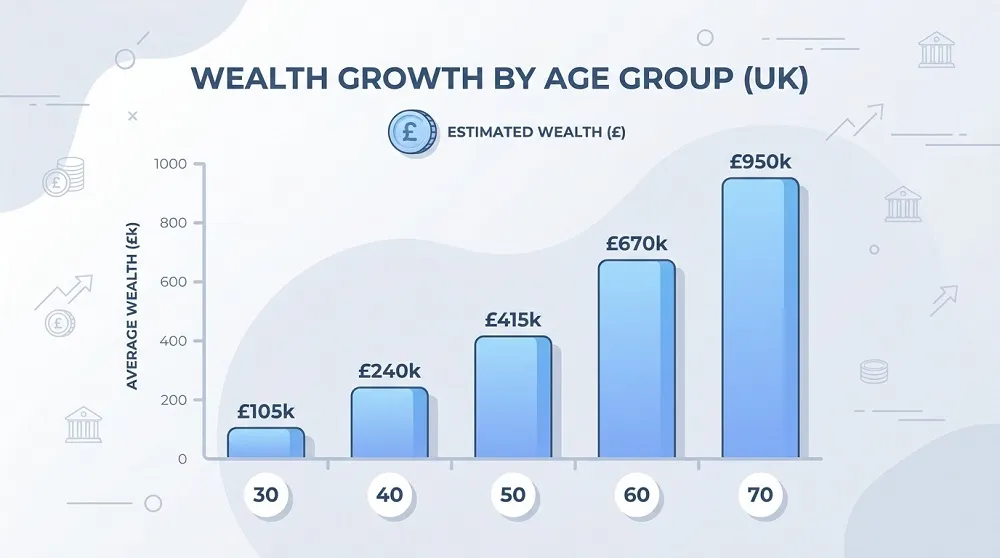
What Affects Your Premium
Age and health status matter most. As you get older, you’re statistically more likely to claim, so premiums rise steadily from your 40s onward.
Location changes the price because private treatment simply costs more in some areas. London premiums are consistently higher than premiums in Cardiff, Manchester, or Edinburgh because hospital and consultant fees are higher there.
Excess level works the same way it does with car insurance. A higher excess, meaning you pay more out of pocket when you claim, lowers your monthly premium. Choosing a £500 excess instead of £100 can meaningfully reduce your monthly cost.
Smoker status increases premiums because smoking raises the statistical likelihood of future claims.
Individual vs. couple vs. family cover changes the total cost, but many insurers offer a discount when you add a partner or children rather than buying separate policies.
How to Reduce Your Premium Without Losing Important Cover
A few practical options actually make a difference. Raising your excess is the most effective lever if you’re confident you won’t need to claim often. Paying annually instead of monthly avoids the interest some insurers add to monthly instalments. Choosing a moratorium underwriting plan over full medical underwriting can also reduce admin costs and sometimes premiums, though it comes with trade-offs we’ll cover next.
Understanding Underwriting (the Part Most Guides Skip)
Underwriting decides what your policy will and won’t cover based on your medical history, and it’s genuinely one of the most important decisions you’ll make when buying health insurance. Most comparison sites barely touch on this, which is a real gap, because getting it wrong can mean discovering at claim time that something isn’t covered.
Full Medical Underwriting (FMU) Explained
With full medical underwriting, you complete a detailed health questionnaire when you apply. The insurer reviews your medical history and tells you upfront exactly what is and isn’t covered. This gives you certainty from day one, because you know precisely where you stand rather than finding out later.
Moratorium Underwriting Explained
Moratorium underwriting skips the detailed questionnaire. Instead, it automatically excludes any condition you’ve had symptoms, treatment, or advice for in the five years before your policy started. If you stay symptom-free and treatment-free for that condition for two continuous years while insured, it can then become covered. This is faster to set up but less certain, since you won’t get a clear answer about your exclusions until you actually try to claim.
Continued Underwriting (Switching Providers Without Losing Cover)
If you already have a policy and want to switch insurers, continued underwriting (sometimes called continuous medical underwriting) lets you carry over the same level of cover you already had, including any conditions that had already become covered under your old policy’s moratorium terms. Without this, switching providers could mean resetting your moratorium clock and losing cover you’d already built up.
Which Underwriting Type Is Right for You?
If you have a complex medical history and want certainty, full medical underwriting is usually the better choice, even though the application takes longer. If you’re generally healthy and want a quick, straightforward setup, moratorium underwriting is often simpler. If you’re switching from an existing policy, always ask specifically about continued underwriting so you don’t lose ground you’ve already covered.
Types of Health Insurance Policy in the UK
Individual Health Insurance
This covers one person. It’s the simplest and usually the cheapest option if you’re buying cover just for yourself.
Couples and Joint Health Insurance
A joint policy covers you and your partner under one plan. This often works out cheaper than two separate individual policies, and most insurers require you to live at the same address to qualify, though marriage isn’t usually required.
Family Health Insurance
Family policies extend cover to your children. Many insurers only charge for your oldest child if you have two or more dependants aged 19 or under, which can make family cover better value than it first appears.
Business and Group Health Insurance for Employers
Group health insurance lets employers provide cover for staff, often at a lower cost per person than individual policies because the risk is spread across a larger group.
How group cover differs from individual policies comes down to underwriting and pricing. Group schemes typically use simpler underwriting, sometimes covering the whole group without individual medical questionnaires, and pricing is based on the group’s overall risk profile rather than each person’s history.
Tax treatment for employers and employees matters here. If your employer provides health insurance as a benefit, HMRC treats it as a “benefit in kind.” This means it’s added to your taxable income, and your employer reports it on a P11D form. You’ll pay income tax on the value of the premium, but you won’t pay anything upfront for the cover itself, which still makes it a valuable benefit for most employees.
International and Expat Health Insurance
If you split your time between the UK and another country, or work overseas, standard UK health insurance usually won’t help much, since most UK policies only cover treatment within the UK. International health insurance plans are built specifically for people who need cover across multiple countries.
The Immigration Health Surcharge (IHS) and how it relates to private cover is something that catches a lot of visa holders out. If you’re applying for a UK visa for more than six months, you’ll typically need to pay the IHS as part of your application. Once paid, you get access to NHS services on broadly the same basis as a UK resident. Private health insurance doesn’t replace this requirement, and you can’t avoid paying the IHS just because you also hold a private policy. The two are separate systems that don’t cancel each other out.
Top UK Health Insurance Providers Compared
There’s no single “best” provider for everyone, because the right choice depends on your priorities, whether that’s mental health cover, customer service, or price. Here’s how the major UK insurers compare based on independent research from myTribe Insurance Experts’ 2026 ratings.
| Provider | Average Monthly Cost (Age 30) | Standout Strength | Key Trade-Off |
|---|---|---|---|
| Bupa | £89.39 | Strongest mental health cover, won’t stop paying because a condition becomes long-term | Higher average price than most rivals |
| WPA | £66.22 | Highly flexible modular cover, top Trustpilot rating among UK insurers since 2021 | Smaller brand recognition than Bupa or AXA |
| AXA Health | Varies by tier | Strong cancer and outpatient care options, also serves businesses | Marketing-heavy pages, less pricing transparency |
| Vitality | From £44/month | Rewards programme can reduce renewal increases over time | Premium reductions depend on staying active and engaged |
| Aviva | Varies by tier | Clear discounts for couples and multi-product holders | Limited public cost benchmarking available |
Bupa
Bupa is the UK’s largest private healthcare brand and topped myTribe’s 2026 ratings with a score of 91.4%. Its biggest strength is mental health cover. Unlike many competitors, Bupa has committed to continuing mental health treatment even if a condition becomes long-term rather than cutting cover off.
AXA Health
AXA Health splits its cover into modular care options, including Cancer Care, Outpatient Care, and Mental Health Care, which you combine to build your policy. This makes it a good fit if you want to pay only for what you’re likely to use, though it also means you need to think carefully about which combination suits you.
Vitality
Vitality stands out for its rewards-based model. By staying active and engaging with their health and fitness programme, members can reduce how much their premium increases at renewal. Their pricing starts from around £44 a month for a basic policy, making it one of the more accessible entry points.
Aviva
Aviva offers solid, straightforward cover with clear discounts for couples and customers who hold multiple Aviva products. It covers all parts of the UK, including the Channel Islands and Isle of Man, which not every insurer does.
WPA
WPA is a not-for-profit insurer, which means it has no shareholders to satisfy, something it leans on heavily in its marketing. It’s held the highest Trustpilot rating among UK health insurers since 2021, and its Complete Health policy uses a modular structure with a core plan plus six optional extras you can add individually.
The Exeter
The Exeter is a smaller, member-owned mutual insurer that often appears in independent “best of” lists for its flexibility and customer service, though it has a smaller market footprint than the bigger five.
How to Buy Health Insurance: Comparison Site vs. Broker vs. Direct
This is a genuinely useful comparison that almost no source covers fairly, because comparison sites and insurers are each trying to get you to use their own channel.
Buying Direct from an Insurer
Going straight to Bupa, AXA, or another insurer means you’re dealing with one company and one product range. This works well if you already know which insurer you want, but you won’t see how their price and cover compare to anyone else’s.
Using a Comparison Site
Sites like Compare the Market, MoneySuperMarket, and GoCompare let you see multiple quotes quickly. The catch is that these platforms typically only show quotes from a limited panel, often around 8 to 9 insurers, working through a partner broker. You’re not seeing the whole market, just a curated slice of it.
Using a Whole-of-Market Broker
A specialist health insurance broker has access to a much wider range of insurers, including smaller or niche providers that don’t appear on the big comparison sites. Brokers also tend to ask about your actual needs before recommending anything, rather than just showing you the cheapest options. The trade-off is that getting a quote takes a conversation rather than a few clicks.
Questions to Ask Before You Buy
Whichever route you choose, ask these before signing up: What underwriting type does this policy use? What exactly counts as a pre-existing condition under this insurer’s rules? How much will my premium likely rise at renewal? Is there a waiting period before I can claim? And can I add family members later without restarting underwriting from scratch?
How to Make a Claim on Your Health Insurance
Understanding how a claim actually works helps you avoid delays when you need treatment most.
Step-by-Step Claims Process
-
- See your GP first. In almost all cases, you need a GP referral before your insurer will authorise specialist treatment.
- Tell your GP you have private cover. They’ll write a referral letter aimed at private treatment rather than an NHS pathway.
- Contact your insurer to start a claim. Most insurers let you do this online or by phone, and you’ll need your policy number and the GP’s referral details.
- Get authorisation before treatment. Your insurer needs to confirm the treatment is covered before you proceed, otherwise you risk paying out of pocket.
- Attend your appointment or procedure. The hospital or consultant typically bills the insurer directly for covered treatment.
- Pay any excess. If your policy has an excess, you’ll usually pay this directly to the provider or it’s deducted from what the insurer pays out.
What to Do If a Claim Is Refused
If your claim is turned down, ask your insurer for a clear written explanation of why. Many refusals come down to a misunderstanding about pre-existing conditions or a missing GP referral rather than a genuine policy exclusion. If you believe the decision is wrong, you can formally complain to the insurer, and if that doesn’t resolve it, escalate to the Financial Ombudsman Service.
Tips to Avoid Claim Delays or Rejections
Always get authorisation before treatment starts, double check that your chosen hospital and consultant are part of your insurer’s network, and keep a copy of your GP referral letter. These three habits prevent the vast majority of claim problems.
Switching or Renewing Your Health Insurance
Why Renewal Premiums Often Increase
Health insurance premiums almost always rise at renewal, even if you haven’t made a claim. This happens because of two combined factors: you’re a year older, which statistically increases your claim risk, and medical treatment costs generally rise each year, a trend insurers call medical inflation.
How to Switch Providers Without Losing Pre-Existing Cover
If you’re unhappy with a renewal price increase, you don’t have to stay with the same insurer. The key is asking your new insurer for continued underwriting, which carries across any conditions that had already become covered under your previous policy’s moratorium terms. Without this step, switching could mean losing cover you’d already earned.
When It’s Worth Shopping Around vs. Staying Put
Shopping around makes sense if your renewal increase feels disproportionate to your age and circumstances, or if your needs have changed, for example if you no longer need family cover. It’s usually worth staying put if you have complex pre-existing conditions already covered under full medical underwriting, since starting fresh with a new insurer could reset some of those protections.
Frequently Asked Questions
Is health insurance through my employer a taxable benefit?
Yes. HMRC treats employer-paid health insurance as a benefit in kind. Your employer reports the value on a P11D form, and you’ll pay income tax on it, though you won’t pay for the premium itself out of your salary.
Can I get health insurance with a pre-existing condition?
Usually yes, but the condition itself typically won’t be covered, at least initially. Some insurers will reconsider cover after a symptom-free period, often around five years, though this varies by provider and condition.
Do I need a medical exam to take out health insurance?
No. Most UK insurers don’t require a physical medical exam. You’ll answer a health questionnaire instead, either in detail (full medical underwriting) or in a simplified form (moratorium underwriting).
Is there an age limit for UK health insurance?
There’s no strict upper age limit, but most insurers require you to be at least 18, and premiums rise noticeably as you get older. Some employer group schemes set their own age limits.
Can I still use the NHS if I have private health insurance?
Yes. Everyone in the UK keeps full access to NHS care regardless of whether they hold private health insurance. Many people use both, choosing private cover for planned treatment and the NHS for emergencies.
What happens to my cover if I develop a chronic condition?
Most policies will cover the cost of diagnosing a new chronic condition, such as the initial tests and specialist consultation. Once you have a confirmed diagnosis, ongoing management and treatment usually moves to the NHS rather than continuing under your private policy.
Final Thoughts
Health insurance in the UK isn’t a one-size-fits-all decision. For some people, the speed of getting treated and the choice of hospital make it well worth the monthly cost. For others, particularly those happy to rely on the NHS for non-urgent care, it adds expense without much practical benefit. The most useful thing you can do before buying is understand exactly how underwriting works, get clear on what’s excluded, and compare more than just the headline price. A slightly more expensive policy with full medical underwriting and clear mental health cover can end up being far better value than a cheap policy that leaves you exposed exactly when you need it most.