
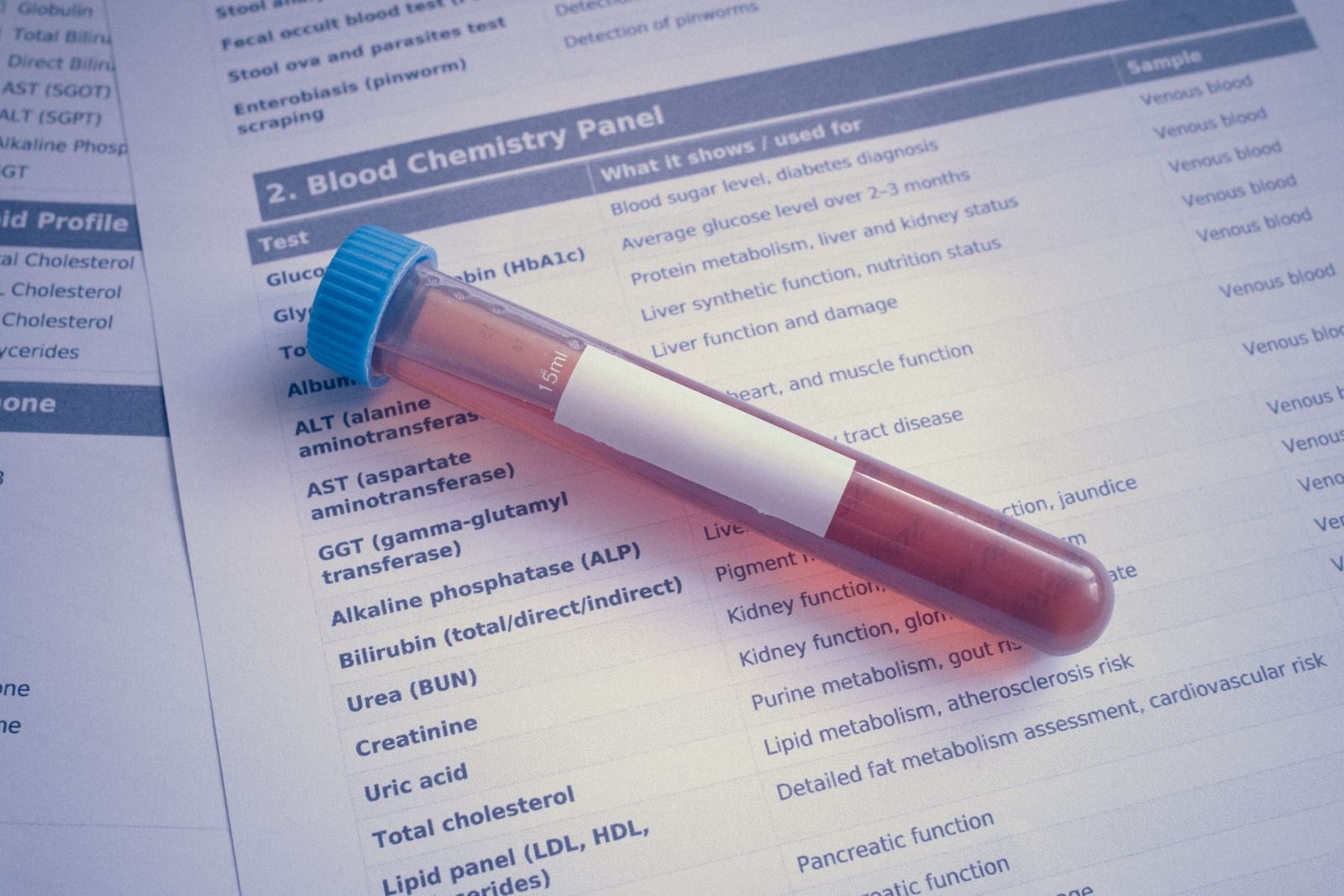
High cholesterol does not usually cause symptoms. You can only find out if you have it from a blood test. That is the NHS position, and it is the most important line in this article.
If you are looking for a number, the healthy target for total cholesterol in the UK is below 5 mmol/L. That is the figure for healthy adults, from the NHS and the British Heart Foundation. After a heart attack or stroke, the target is lower, below 4 mmol/L.
But there is no single number that is dangerous for everyone. A total cholesterol of 6.5 mmol/L is high, and it needs attention, but whether it is dangerous depends on the rest of your lipid profile, your blood pressure, whether you smoke, whether you have diabetes, your weight, your age, and your family history. A GP reads all of those together, usually with a risk score called QRISK. This guide explains what each number means, why you will see different thresholds quoted online, and which results should make you see a GP soon.
What cholesterol is
Cholesterol is a fatty substance in your blood. Your body needs some of it, to build cells and make hormones. Too much of it can build up in the walls of your blood vessels, narrowing them over time. That is called atherosclerosis. Narrowed vessels make a heart attack or a stroke more likely.
A cholesterol blood test, called a lipid profile, usually reports five figures. Total cholesterol is all the cholesterol in your blood. LDL cholesterol is often called bad cholesterol, because it carries cholesterol to your cells and can build up in artery walls. HDL cholesterol is often called good cholesterol, because it carries cholesterol away from your cells and back to your liver. Non-HDL cholesterol is total cholesterol minus HDL, so it is all the bad types added together. Triglycerides are another type of fat in the blood, and they are reported alongside cholesterol.
That is why total cholesterol on its own is not enough. A total of 6.0 mmol/L with a high HDL can be lower risk than a total of 5.2 mmol/L with a low HDL and a high LDL. Always look at the full profile, not one line.
Table 1: Healthy cholesterol levels in the UK
These are the general healthy levels for adults in the UK, from the NHS and the British Heart Foundation. They are targets, not a pass or fail test. Your own target may be lower if you have heart disease, diabetes, or other risk factors.
| Measure | Healthy level | After a heart attack or stroke |
|---|---|---|
| Total cholesterol | Below 5 mmol/L | Below 4 mmol/L |
| LDL (bad) cholesterol | Below 3.0 mmol/L | Below 2.0 mmol/L |
| HDL (good) cholesterol | Above 1.0 mmol/L for men, above 1.2 mmol/L for women | Same |
| Non-HDL (bad) cholesterol | Below 4 mmol/L | Below 2.6 mmol/L |
| Triglycerides | Below 1.7 mmol/L fasting, below 2.3 mmol/L non-fasting | Same |
| Total cholesterol to HDL ratio | Below 6, ideally below 4 | Same |
Your lab report may show slightly different ranges. Laboratories use different methods, so always read your result against the range printed on your own report, and against what your GP says. A result just above 5.0 mmol/L is common. The average total cholesterol level in the UK is often quoted as 5.7 mmol/L, which is above the healthy target. That does not make it safe. It means raised cholesterol is common, and it is worth acting on.
Table 2: What the different numbers mean
If you search for cholesterol levels online, you will see 5, 6.2, 6.5, 7.5 and 7.8 mmol/L, and they look like they disagree. They do not, once you know where each one comes from.
| Total cholesterol | What it is | What it means |
|---|---|---|
| Below 5.0 mmol/L | NHS / BHF healthy target | The general target for healthy adults. |
| 5.0 to 6.4 mmol/L | Commonly quoted “too high” band | Raised. Needs lifestyle changes, and a GP will look at your overall risk. |
| 6.2 mmol/L | Commonly quoted lab boundary | From US-derived bands, where 5.2 to 6.2 is borderline high and above 6.2 is high. It is not an NHS threshold. It explains why you may have seen 6.2 quoted online. |
| 6.5 to 7.8 mmol/L | Commonly quoted “very high” band | Well above target. Your GP will want to act, usually with lifestyle changes and a discussion about medicine. |
| Above 7.5 mmol/L | NICE / Simon Broome line | Suspect familial hypercholesterolaemia, the inherited form. See the FH section below. |
| Above 7.8 mmol/L | Commonly quoted “extremely high” band | Very high. Needs prompt GP review, and FH should be considered. |
| Above 9.0 mmol/L | NICE record-search line, age 30 or older | NHS lipid pathways say refer for FH assessment regardless of family history at this level. |
The bands at 6.5 and 7.8 are widely quoted in UK private-lab guides. They are useful as a rough scale, but they are not NHS thresholds. The NHS healthy target is 5.0, and the NICE FH line is 7.5. Do not treat 7.8 as the point where cholesterol suddenly becomes dangerous. Risk rises gradually as the level rises, and it rises faster when other risk factors are present.
Symptoms: why there are none
High cholesterol does not usually cause symptoms. It does not cause tiredness, headaches, dizziness, or pain you can feel. It does not make you feel unwell day to day. Most people who have it feel completely well, and they only find out from a routine blood test, an NHS Health Check, or a test for another reason.
That is what makes it dangerous. There is no warning sign to wait for. If you wait until you feel ill, you may already have narrowed arteries. The damage happens slowly, over years, without symptoms.
Some symptoms are wrongly blamed on cholesterol. Tiredness has many causes, from poor sleep to low iron to thyroid problems. Headaches and dizziness are not cholesterol symptoms. Feeling your heart beat faster is not a cholesterol symptom either. None of these prove your cholesterol is high, and none of them prove it is normal.
Chest pain, sudden breathlessness, or weakness on one side of the body are different. Those can be signs of a heart attack or a stroke. High cholesterol raises the risk of those events over time, but the pain or weakness is a sign of the event itself, not of the cholesterol level. If you have chest pain, or symptoms that could be a stroke, call 999. Do not book a cholesterol test and wait.
Familial hypercholesterolaemia: the red flags
Most high cholesterol is caused by diet, lifestyle and age. A smaller number of people have familial hypercholesterolaemia, often shortened to FH. It is an inherited condition, which means cholesterol is very high from birth, and heart disease can start much earlier than usual. It needs to be found, because it runs in families, and relatives can be tested too.
NICE says to suspect FH in an adult with any of these:
- Total cholesterol above 7.5 mmol/L, or LDL above 4.9 mmol/L, or non-HDL above 5.9 mmol/L.
- A personal or family history of premature coronary heart disease, meaning a heart event before age 60 in the person or a first-degree relative.
- Tendon xanthomata, which are thickened tendons caused by cholesterol deposits, often in the Achilles tendon at the back of the heel, or in the finger tendons.
- Xanthelasma, which are soft yellow cholesterol deposits on the eyelids.
- Corneal arcus, a pale ring in the cornea of the eye. This only counts as a warning sign under age 45, because it becomes common with age.
The absence of these signs does not rule out FH. Many people with FH have no visible signs at all. That is why the cholesterol number and the family history matter most.
If your total cholesterol is above 7.5 mmol/L, or your LDL is above 4.9 mmol/L, see your GP and ask about FH. Your GP can use the Simon Broome criteria to make a clinical diagnosis, and can arrange genetic testing and testing for close relatives. Treatment usually aims for at least a 50% reduction in LDL from the starting level, usually with a high-intensity statin. Children with FH are assessed by a specialist by age 10.
NHS lipid pathways also say to refer for FH assessment regardless of family history if total cholesterol is above 9.0 mmol/L, or LDL is above 6.5 mmol/L, or non-HDL is above 7.5 mmol/L. Do not wait for symptoms at those levels. Book a GP appointment.
Who is more likely to have high cholesterol
The NHS lists the groups who are more likely to get high cholesterol. You are more likely to have it if you are over 50, if you are a man, if you have been through the menopause, or if you are of South Asian or sub-Saharan African origin. It can also run in families.
It can also be caused by eating fatty food, not exercising enough, being overweight, smoking, and drinking alcohol. Some medicines and medical conditions can raise it too, which is another reason a GP should look at the whole picture, not just the cholesterol number.
You cannot tell from how you look or feel whether you are in one of these groups and your cholesterol is high. The only way to know is a blood test.
How it is tested
A cholesterol test is a blood test. It can be a finger-prick test or a blood sample taken from your arm. It is often done as part of an NHS Health Check, which is offered to adults aged 40 to 74 in England every 5 years. Your GP can also test sooner if you have risk factors, a family history of early heart disease, or a condition such as diabetes.
You do not usually need to fast for a cholesterol test, but your GP or the testing service will tell you if fasting is needed for your triglyceride result. Take the result letter with you to your appointment, or ask for the full breakdown, not just the total. You need the LDL, HDL, non-HDL and triglyceride figures to understand the result.
If your result is high, your GP will usually repeat the test to confirm it, check your blood pressure, ask about smoking, diabetes and family history, and work out your 10-year risk of cardiovascular disease with QRISK3. That risk score, not the cholesterol number alone, decides whether medicine is offered.
What the GP does with the result
For primary prevention, meaning you have not had heart disease yet, NICE says adults with a 10-year cardiovascular disease risk of 10% or more are offered a high-intensity statin, usually atorvastatin 20 mg, along with diet and lifestyle advice. The 10% figure is the trigger, not a cholesterol level. A younger person with a total cholesterol of 6.5 mmol/L but a low overall risk may be offered lifestyle changes first. An older person with a total of 5.5 mmol/L but high blood pressure, diabetes and smoking may be offered a statin.
For secondary prevention, meaning you have already had a heart attack, stroke, angina or another cardiovascular event, the target is lower: LDL 2.0 mmol/L or less, or non-HDL 2.6 mmol/L or less. A high-intensity statin is usually started, often at a higher dose, and the level is checked again after 2 to 3 months.
Statins are a GP decision. Do not start, stop or change a statin on your own, and do not take a statin because a family member takes one. If you have side effects, tell your GP. There are other medicines, such as ezetimibe, that can be added if a statin alone is not enough, or used if a statin is not tolerated.
What lowers cholesterol
The NHS advice is to eat healthily and get more exercise. In practice, that means less saturated fat, more soluble fibre such as oats and beans, more fruit and vegetables, less processed food, regular physical activity, stopping smoking, cutting back alcohol, and losing weight if you are overweight. These changes can lower cholesterol, and they also lower blood pressure and blood sugar, which lowers overall heart risk.
A full 7-day diet plan, with soluble fibre and plant sterol amounts and a shopping list, is a separate article in the Top 30 list, “how to lower cholesterol naturally UK diet plan”. It is not part of this article, and it is not published yet. This article keeps the diet advice short on purpose, so the symptom and level questions stay clear.
Do not buy a supplement or a “cholesterol cure” because it promises a fast drop. Some products, such as plant sterol drinks, can lower LDL by a small amount, but they are not a substitute for lifestyle changes or for medicine your GP has prescribed. If you want to try one, ask your GP or pharmacist first, especially if you are already taking a statin.
When to see a GP, and when to call 999
See a GP if your total cholesterol is above 5.0 mmol/L and you have not discussed it, if it is above 6.5 mmol/L, if your LDL is above 3.0 mmol/L, or if any FH red flag applies. See a GP sooner if your total is above 7.5 mmol/L, or if a close relative had heart disease before 60, or if you have tendon xanthomata, xanthelasma, or corneal arcus under 45.
Call 999 if you have chest pain, pressure or tightness in the chest, sudden severe breathlessness, or signs of a stroke, such as face drooping, arm weakness, or speech problems. Those are emergencies. They are not cholesterol symptoms, and they are not a reason to wait for a routine blood test.
Frequently asked questions
Does high cholesterol cause symptoms?
No, not usually. The NHS says high cholesterol does not usually cause symptoms, and you can only find out if you have it from a blood test. Tiredness, headaches and dizziness are not cholesterol symptoms.
What cholesterol level is dangerous?
There is no single dangerous number for everyone. Below 5.0 mmol/L total cholesterol is the healthy target. Above 6.5 is very high in commonly quoted lab bands. Above 7.5 should make a GP suspect familial hypercholesterolaemia. Above 9.0 needs prompt FH assessment. Danger depends on the full profile and your overall heart risk, not one number.
Is 6.5 cholesterol high?
Yes. A total cholesterol of 6.5 mmol/L is above the healthy target of 5.0, and it is the start of the commonly quoted “very high” band. It needs lifestyle changes and a GP discussion about your overall risk. It does not automatically mean you need a statin, and it does not mean you have FH, but it should not be ignored.
What is a good LDL level?
Below 3.0 mmol/L is the healthy target for most adults, from the British Heart Foundation. After a heart attack or stroke, the target is below 2.0 mmol/L. LDL is the “bad” cholesterol that builds up in artery walls, so it matters more than total cholesterol on its own.
How do I get my cholesterol checked in the UK?
Ask your GP, or wait for your NHS Health Check if you are aged 40 to 74. The Health Check includes a cholesterol test every 5 years. Your GP can test sooner if you have risk factors or a family history of early heart disease.
Can I lower cholesterol without statins?
Lifestyle changes can lower it, by eating healthily, exercising more, stopping smoking, cutting back alcohol, and losing weight if needed. Whether that is enough depends on your level and your overall risk. If your 10-year risk is 10% or more, NICE says a statin should be offered alongside lifestyle changes. Do not stop a prescribed statin to try lifestyle changes alone without talking to your GP.
Sources and disclaimer
- NHS, High cholesterol
- NHS, Cholesterol levels
- British Heart Foundation, Understanding your cholesterol levels
- NICE, Familial hypercholesterolaemia: identification and management, CG71
- NICE, Cardiovascular disease: risk assessment and reduction, including lipid modification, NG238, and Cardiovascular risk assessment and lipid modification, QS100.
This article is general information, not medical advice. It does not diagnose or treat any condition. Speak to your GP or pharmacist if you are worried about your cholesterol, if you have a family history of early heart disease, or if you have any of the FH red flags in this article.