
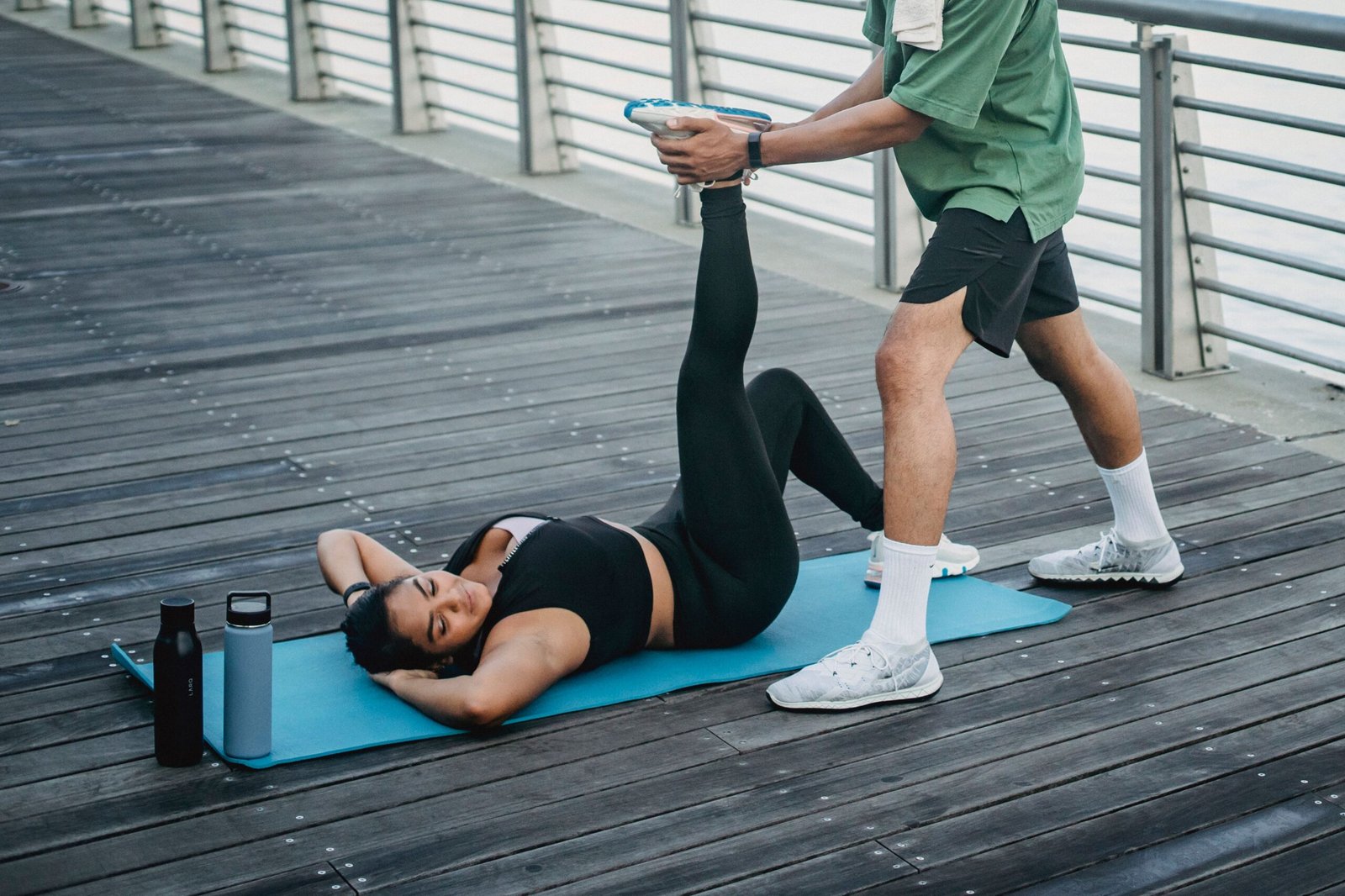
Flexibility improves through consistent static stretching, held for 30 seconds per muscle group, performed at least two to three times weekly. A large multi-level meta-analysis of 189 studies covering 6,654 adults found a large positive effect of chronic (repeated over time) static stretching on flexibility, with the effect size holding regardless of age, sex, training status, or weekly frequency, meaning the biggest lever isn’t how often or how hard you stretch, but simply staying consistent over weeks.
What Actually Happens When You Stretch
Flexibility gains come from two separate mechanisms operating on different timelines. Short-term gains, the loosened feeling immediately after a stretching session, come primarily from increased stretch tolerance: your nervous system adapts to allow a greater range of motion before triggering a protective contraction, without the muscle tissue itself physically changing length. Longer-term gains, building over five or more weeks of consistent practice, involve genuine structural adaptation: connective tissue and fascia gradually remodel in response to repeated mechanical stress, a principle known as Davis’s Law. Some research also points to sarcomerogenesis, the body adding new contractile units in series along a muscle fibre when it’s regularly stretched beyond its resting length, physically lengthening the muscle over time rather than just loosening it temporarily.
Static vs Dynamic Stretching
| Type | How It Works | Best Timing |
|---|---|---|
| Static stretching | Hold a position of mild discomfort for 10-30+ seconds without movement | After exercise, or as a standalone session |
| Dynamic stretching | Continuous, controlled movement through a range of motion (e.g. walking lunges) | Before exercise, as part of a warm-up |
| PNF stretching | Alternates muscle contraction and relaxation to extend range further | With a partner or trained guidance, for advanced flexibility work |
A systematic review of randomised controlled trials found moderate to strong evidence that static stretching before exercise does not reduce overall injury rates, which is why current guidance favours dynamic stretching as a warm-up and reserves static stretching for after activity or as a dedicated flexibility session.
How to Improve Flexibility: The Evidence-Based Protocol
- Frequency: at least two to three sessions weekly, per American College of Sports Medicine (ACSM) guidance; more frequent sessions don’t significantly outperform this baseline according to the meta-analysis data
- Hold time: 30 seconds per stretch is sufficient; research shows holding longer than 30 seconds produces no meaningfully greater benefit for most muscle groups
- Intensity: stretch to the point of mild discomfort, not pain. Research on “microstretching,” working at roughly 30-40% of maximum intensity (where 100% would be painful), found this approach more effective than pushing harder into the stretch
- Coverage: target all major muscle-tendon groups, neck, shoulders, chest, trunk, lower back, hips, legs and ankles, rather than focusing only on one area
- Minimum viable dose: even 5-10 minutes of stretching per session is enough to produce measurable gains when done consistently
Sample Weekly Flexibility Routine
| Muscle Group | Stretch | Hold Time |
|---|---|---|
| Hamstrings | Seated forward fold | 30 seconds x 2 |
| Hips | Kneeling hip flexor stretch | 30 seconds x 2 per side |
| Lower back | Child’s pose | 30-60 seconds |
| Chest and shoulders | Doorway chest stretch | 30 seconds x 2 |
| Calves | Standing wall calf stretch | 30 seconds x 2 per side |
Why Some People Are More Flexible Than Others
- Genetics: connective tissue composition and joint structure are substantially inherited, meaning two people following identical routines can end up with different results
- Age: flexibility declines by roughly 10% per decade from age 20 to 49, largely due to reduced tissue elasticity and hydration over time
- Temperature: warmer muscles are more pliable, since heat increases tissue extensibility, which is why stretching after light activity often feels easier than stretching cold
- Training history: sports and movement patterns that regularly take joints through a full range of motion build and maintain flexibility as a natural side effect
- Baseline flexibility: the meta-analysis found people who started with poor flexibility saw larger improvements than those who started with average flexibility, meaning stretching offers proportionally more benefit the more room for improvement exists
How Long Until You Notice Results?
A 2021 meta-analysis found a minimum of five weeks of consistent stretching, with at least two sessions weekly, was sufficient to produce measurable improvements in range of motion. Some flexibility gains appear within the first session through increased stretch tolerance, but these are temporary; the more durable, structural gains that persist over time require this longer, consistent timeline.
What Happens if You Stop Stretching?
Range of motion typically begins declining within two to six weeks of stopping a stretching routine, according to detraining research, though it doesn’t fully return to baseline: people retain a moderate portion of their gains even after several weeks off. Staying generally active and using joints through their full range in everyday movement or other exercise helps preserve flexibility gains even when a dedicated stretching routine lapses.
A Note on Hypermobility
There’s a point where increasing range of motion stops being beneficial. Joints that already move well beyond a typical range, without the muscular strength to control that range, are hypermobile, and pushing them further with aggressive stretching increases the risk of joint instability and injury rather than reducing it. If your joints naturally bend further than average, prioritising strength around those joints matters more than additional stretching. Our guide to hypermobility and yoga in pregnancy covers this distinction between flexibility and stability in more detail for anyone with naturally lax joints.
Combining Stretching with Movement Practices
Gentle movement-based practices like tai chi, Pilates and yoga improve flexibility in specific, functional movement patterns and also help reduce fall risk in older adults, according to Mayo Clinic guidance. Our guide to 3 person yoga poses covers a partner-based approach that builds both flexibility and strength simultaneously, if a solo stretching routine feels repetitive on its own. Our guide to balance board exercises covers a related, complementary tool for improving proprioception and joint stability alongside flexibility work.
What Is the Fastest Way to Improve Flexibility?
There is no meaningfully faster route than consistent static stretching for 30 seconds per muscle group, at least two to three times weekly. Research on stretching duration and frequency consistently shows that pushing intensity or hold time beyond these thresholds doesn’t accelerate results; only consistency over a minimum of five weeks reliably produces measurable, lasting gains.
Frequently Asked Questions
Does stretching every day improve flexibility faster than every other day?
Not necessarily. The meta-analysis of 189 studies found weekly session frequency did not significantly moderate flexibility outcomes for chronic static stretching, meaning two to three well-executed weekly sessions can produce results comparable to daily stretching.
Is it true that stretching makes your muscles permanently longer?
Partially. Most of the immediate loosening you feel after a single stretch comes from increased stretch tolerance in the nervous system, not permanent muscle lengthening. However, some evidence suggests consistent, long-term stretching contributes to genuine structural changes in muscle fascicle length and connective tissue over time.
Can stretching reduce injury risk?
The evidence is mixed for injuries overall, but there’s preliminary evidence that static stretching specifically reduces musculotendinous injuries, meaning strains and tears of muscles and tendons, even though broader injury-prevention claims aren’t well supported by randomised trials.
Should I stretch before or after exercise?
Dynamic stretching is generally recommended before exercise as part of a warm-up, since it prepares muscles for movement without the temporary strength reduction that acute static stretching can cause. Static stretching is better placed after exercise or as its own dedicated session.
This article is for general information only and is not a substitute for professional guidance. If you have joint hypermobility, a recent injury, or chronic pain, please consult a physiotherapist before starting a new stretching routine.
About the Author: Written by the Well Ideas editorial team, dedicated to researching and sharing practical, evidence-informed wellness guidance for a healthier everyday life.