
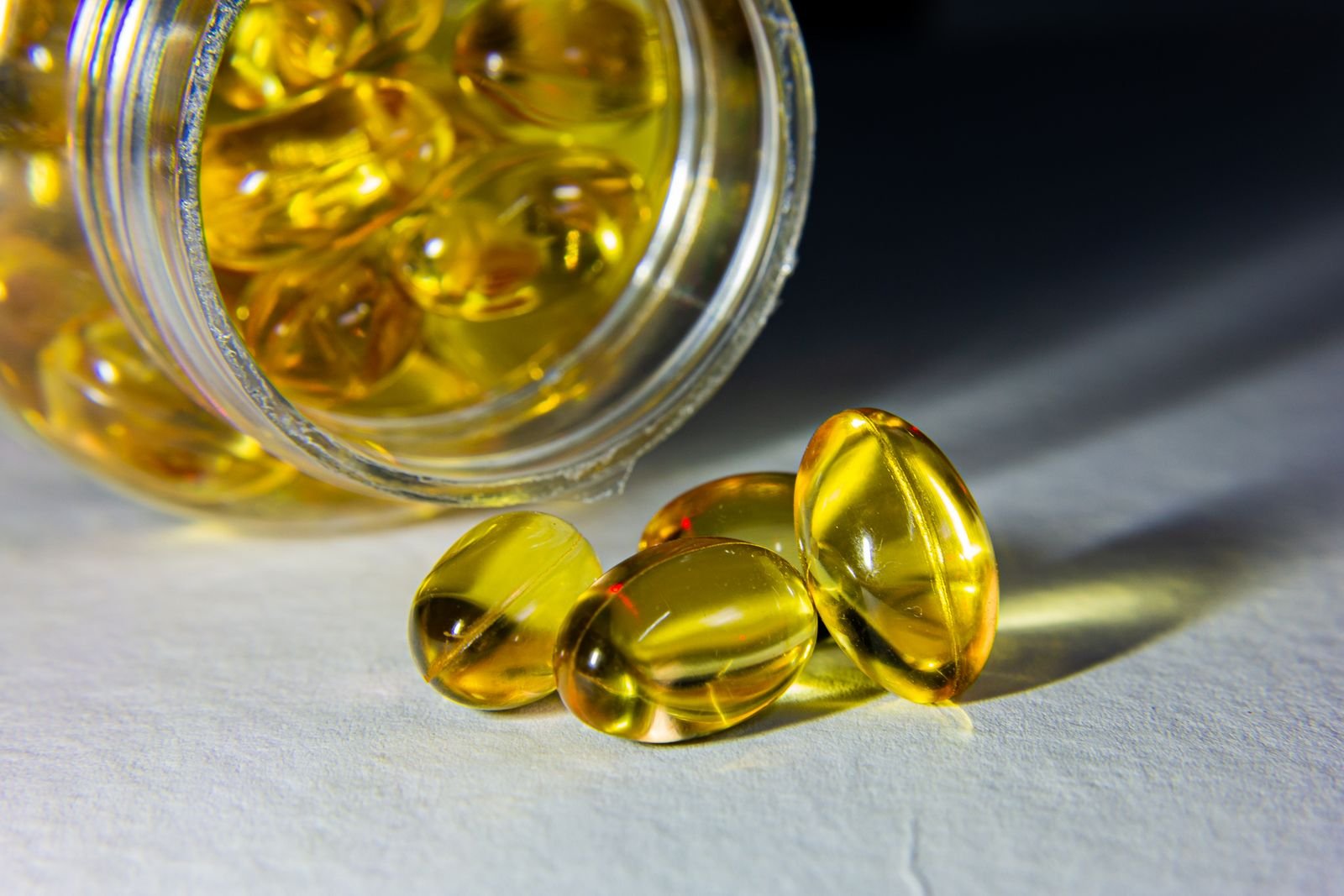
Most people with low vitamin D have no symptoms at all. A blood test is the only way to know your level. The NHS advice is simple: take 10 micrograms (mcg) of vitamin D a day, which is 400 IU, during autumn and winter. If you are at risk of deficiency, take it all year round. In the UK, sunlight is too weak to make vitamin D from October to early March, so food and supplements have to fill the gap.
That short answer is the whole article in miniature. The rest of this guide explains what the symptoms are and why they do not prove anything on their own, what your blood level in nmol/L means, who is most at risk in the UK, how much to take, and when to see a GP.
What vitamin D does
Vitamin D helps regulate calcium and phosphate. Your body needs both to keep bones, teeth and muscles healthy. Without enough vitamin D, bones can become soft and painful. In children, a severe lack can cause rickets. In adults, it can cause osteomalacia. That means soft bones and bone pain.
Your body makes vitamin D from direct sunlight on skin when you are outdoors. It also gets a small amount from food. From about late March or early April to the end of September, most people in the UK can make all they need from sunlight.
Between October and early March, UK sunlight is too weak. The body does not make enough vitamin D, however long you spend outside. Food and supplements have to fill the gap in those months. This is why the UK advice changes with the seasons. Sunlight is enough in summer for most people. It is not enough in autumn and winter.
Table 1: What your blood level means
Blood levels are measured as 25-hydroxyvitamin D, in nanomoles per litre, written as nmol/L. These are the UK bands used by NICE Clinical Knowledge Summaries and the Royal Osteoporosis Society, as used by NHS trusts. Do not use the higher “optimal” ranges of 75 to 100 nmol/L from US sources. They are not the UK target.
| Blood level (nmol/L) | What it means | What to do |
|---|---|---|
| Below 25 | Deficient | See your GP. Treatment is GP-supervised. Do not self-treat with a high dose. |
| 25 to 50 | Insufficient, may be inadequate for some people | Take 10 mcg a day, and speak to your GP or pharmacist if you have symptoms or risk factors. |
| Above 50 | Sufficient for most people | Keep taking 10 mcg a day in autumn and winter, or all year if you are in an at-risk group. |
One number does not tell the whole story. A level of 30 nmol/L with no symptoms and no risk factors is different from a level of 30 nmol/L with bone pain and a fracture after a minor fall. Your GP will look at your level, your symptoms, and your risk factors together.
The NHS does not routinely test people with no symptoms. A test is for people with symptoms that could be due to deficiency, or people at high risk. If you have no symptoms and no risk factors, the advice is to take the 10 mcg supplement in autumn and winter, not to get tested first.
Symptoms: what to look for, and why they do not prove it
Most people with low vitamin D have no symptoms at all. When symptoms do occur, they are vague. They overlap with many other causes. Tiredness alone does not mean you are deficient. Low mood alone does not mean it either.
That vagueness makes symptoms hard to read. A person can feel tired for many reasons. A person can have muscle aches after exercise or illness. Bone pain can also have other causes. A symptom on its own points in many directions at once.
Symptoms that can occur include:
- tiredness and fatigue that does not lift with rest
- bone pain or tenderness, often in the lower back, hips, legs or ribs
- muscle aches, weakness or cramps, including difficulty climbing stairs or rising from a chair
- low mood
Severe, long-lasting deficiency can cause osteomalacia in adults and rickets in children. These need a GP, not a supplement bought on your own.
If you have several symptoms together, they still do not prove deficiency. Tiredness, low mood and muscle aches have many causes, from poor sleep to thyroid problems to low iron. The only way to know your level is a blood test.
Do not use a symptom checklist to diagnose yourself. A checklist can raise a question. It cannot give an answer. Only a blood test can show your level. If symptoms persist, speak to your GP. Tell them what you have noticed and for how long. They can decide if a test is needed.
Vitamin D is not a treatment for COVID-19. The NHS states there is not enough evidence to support taking vitamin D solely to prevent or treat COVID-19.
Who is at risk in the UK
Around 1 in 5 UK adults aged 19 to 64 had levels below the 25 nmol/L deficiency threshold across the year, according to the National Diet and Nutrition Survey 2019 to 2023. That figure covers the whole year. It shows that low levels are common, not rare. Levels are lower in winter, when sunlight is too weak to make vitamin D.
You are more likely to be low if:
- you are not often outdoors, for example if you are frail or housebound
- you live in a care home or another institution
- you usually wear clothes that cover most of your skin when outdoors
- you have dark skin, for example an African, African-Caribbean or south Asian background
- you spend the winter months in the UK, with little sun exposure
Risk is not the same for everyone. Some people have one risk factor. Others have several at once. The more risk factors you have, the more important the daily supplement becomes. If you are in one of these groups, take the supplement all year round. Do not wait for symptoms. Most people with low levels have none.
Children aged 1 to 4, and babies, are also covered by year-round supplement advice. Women and children who qualify for the Healthy Start scheme can get free supplements containing vitamin D.
How much vitamin D to take
The NHS figure for prevention is 10 mcg a day, which is 400 IU. A microgram is 1,000 times smaller than a milligram. One microgram of vitamin D is equal to 40 IU, so 10 mcg is equal to 400 IU. Check the label when you buy a supplement. Some products list IU, and some list mcg.
| Who | How much | When |
|---|---|---|
| Adults and children from age 1 | 10 mcg (400 IU) a day | Autumn and winter, consider it all year if you are at risk |
| Adults and children over 4 who are not often outdoors, in a care home, or usually cover most skin | 10 mcg (400 IU) a day | All year round |
| People with dark skin | 10 mcg (400 IU) a day | All year round, consider it |
| Children aged 1 to 4 | 10 mcg (400 IU) a day | All year round |
| Babies from birth to 1 year | 8.5 to 10 mcg a day | All year round if breastfed, or formula-fed and having less than 500 ml of infant formula a day |
Everyone, including pregnant and breastfeeding women, should consider a daily 10 mcg supplement during autumn and winter. Between late March or early April and the end of September, most people can make all the vitamin D they need through sunlight and a balanced diet, and you may choose not to take a supplement during these months. If you are in an at-risk group, take it all year round.
If your blood level is below 25 nmol/L, your GP may prescribe a treatment course. Treatment doses for confirmed deficiency are GP-prescribed and need calcium monitoring. This article does not give a loading dose as a self-treatment instruction. The 10 mcg daily figure is the prevention and maintenance figure for the general population. If your GP has recommended a different amount, follow their advice, not the general figure in this article.
The upper limit: how much is too much
Do not take more than 100 mcg (4,000 IU) of vitamin D a day, as it could be harmful. This applies to adults, including pregnant and breastfeeding women and the elderly, and children aged 11 to 17. Children aged 1 to 10 should not have more than 50 mcg (2,000 IU) a day. Infants under 12 months should not have more than 25 mcg (1,000 IU) a day.
Taking too many vitamin D supplements over a long period can cause too much calcium to build up in the body. This is called hypercalcaemia. It can weaken the bones and damage the kidneys and the heart.
If you choose to take vitamin D supplements, 10 mcg a day will be enough for most people. You cannot overdose on vitamin D through exposure to sunlight. But always remember to cover up or protect your skin if you are out in the sun for long periods. Check the total dose if you take more than one product. Add the amounts together. Stay within the limit for your age.
Food sources
Food alone is difficult to get enough vitamin D from, especially in autumn and winter. The foods that do contain vitamin D are:
- oily fish, such as salmon, sardines, trout, herring or mackerel
- red meat
- egg yolks
- fortified foods, such as some fat spreads and breakfast cereals
- liver, avoid liver if you are pregnant
In the UK, cows’ milk is generally not a good source of vitamin D, because it is not fortified, as it is in some other countries. Do not rely on milk for vitamin D.
You can buy vitamin D supplements, or vitamin drops containing vitamin D for under 5s, at most pharmacies and supermarkets. Look for a product that gives 10 mcg a day, and check that you are not already getting vitamin D from a multivitamin. If you take more than one product, add the doses together and stay within the upper limit. A varied diet helps in other ways. It does not replace the autumn and winter supplement.
When to see a GP
See your GP if you have ongoing bone pain, muscle weakness that does not improve, or a fracture after a minor fall. Tell your GP that you are worried about vitamin D, and ask whether a blood test is needed. Do not start a high-dose supplement on your own.
If you have already been taking a high dose, tell your GP. Bring the product with you, or note the dose in mcg and IU.
If you have a medical condition that affects how your body handles calcium or vitamin D, such as kidney disease or sarcoidosis, ask your GP before taking any supplement. The general advice in this article does not replace personal medical advice.
If symptoms worry you, do not wait. A short GP visit can answer the question. A blood test can show your level.
For other NHS care, you can also read our guides on normal blood pressure by age in the UK, how to find an NHS dentist accepting new patients in the UK and NHS emergency dentist cost and how to get an appointment in the UK.
Frequently asked questions
Can you tell from symptoms alone if you are deficient?
No. Most people with low vitamin D have no symptoms, and the symptoms that do occur, tiredness, bone pain, muscle aches and low mood, have many other causes. A blood test is the only way to know your level. If you have symptoms that worry you, see your GP, who can decide whether a test is needed.
What level is deficient in the UK?
Below 25 nmol/L is deficient, 25 to 50 nmol/L is insufficient and may be inadequate for some people, and above 50 nmol/L is sufficient for most people. These are the UK bands used by NICE and the Royal Osteoporosis Society. Do not use the higher US “optimal” ranges as your target.
How much vitamin D should I take in winter?
Take 10 mcg a day, which is 400 IU, during autumn and winter. That is the NHS figure for children from age 1 and adults, including pregnant and breastfeeding women. Between October and early March, UK sunlight is too weak to make vitamin D, so the supplement fills the gap.
Should I take vitamin D all year round?
It depends on your risk. Most people can stop in summer, from late March or early April to the end of September, when sunlight is strong enough. Take it all year round if you are not often outdoors, live in a care home, usually cover most of your skin outdoors, or have dark skin. Children aged 1 to 4 should take it all year round, and babies from birth to 1 year need 8.5 to 10 mcg a day all year round if breastfed, or formula-fed and having less than 500 ml of infant formula a day.
Can I get enough vitamin D from food or sun in winter?
No, not in winter. Between October and early March, UK sunlight is too weak to make vitamin D, however long you spend outside. Food contains only small amounts of vitamin D, in oily fish, red meat, egg yolks and fortified foods, and it is difficult to get enough from food alone. That is why the NHS advises a daily 10 mcg supplement in autumn and winter.
Is it safe to take more than 10 mcg a day?
10 mcg a day is enough for most people, and it is the NHS prevention figure. Do not take more than 100 mcg (4,000 IU) a day as an adult, as it could be harmful over a long period. Too much can cause too much calcium to build up in the body, which can weaken bones and damage kidneys and the heart. If your GP has prescribed a higher dose for confirmed deficiency, follow their advice, and do not take a high dose on your own.
Vitamin D deficiency in the UK is common, and it is usually silent. Most people with low levels feel nothing, and the symptoms that do appear do not prove anything on their own. The numbers are simple: 10 mcg a day in autumn and winter, all year round if you are at risk, and a blood test if your GP thinks one is needed. Below 25 nmol/L means deficient, and treatment for that is a GP’s job, not a self-treatment dose.
Sources and disclaimer
- NHS, Vitamin D
- NICE Clinical Knowledge Summary, Vitamin D deficiency in adults
- Royal Osteoporosis Society, Vitamin D and Bone Health: A Practical Clinical Guideline for Patient Management (thresholds below 25, 25 to 50, above 50 nmol/L)
Sources checked 14 Nov 2026.
This article is general information, not medical advice. It does not diagnose or treat any condition. If you are worried about your vitamin D level, speak to your GP or pharmacist, or call NHS 111. If your GP has recommended a different amount of vitamin D, follow their advice.